Health Professions Unite to Issue Warning on Global Epidemic of Non-Communicable Diseases (press release)

May 18, 2011

NCD logos

Geneva, Switzerland 16 May 2011 – The world’s health professions warned today that the global epidemic of non-communicable diseases (NCDs) had become a significant threat to human health and development and unless urgently addressed, the burden of NCDs would continue its dramatic increase.

In launching a new campaign, the World Health Professions WHPA, representing more than 26 million health professionals in 130 countries, declared that non-communicable diseases should be viewed in a holistic way as a combined threat to global health.

Read the rest of this entry »


14th BIAL Medical Award in Medical Sciences

May 12, 2011

Bial is an internationally renowned Portuguese company and its mission is to, among others things, discover and develop therapeutic solutions within the area of health. Bial has been taking on an important role in researching and developing new drugs.

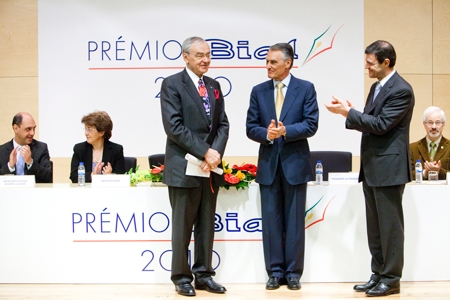
I had the pleasure to be at the ceremony of the BIAL Merit Award in Medical Sciences, last Friday (6th May 2011). This award is one of the most important in the field of health in Europe.
Professor Vladimir Hachinski, a distinguished researcher in the areas of dementia and stroke, was awarded with the sum of 200,000 Euros.

For this and for so much more, I feel that I have to highlight Bial’s work. And because I believe that people are the most important, I have to congratulate Dr. Luis Portela for his presidency in BIAL, along these years.

Prof. Vladimir Hachinski, President of the Portuguese Republic, Prof. Aníbal Cavaco Silva, Bial's President, Dr. Luís Portela

Prof. Vladimir Hachinski, President of the Portuguese Republic, Prof. Aníbal Cavaco Silva, Bial's President, Dr. Luís Portela

Read the rest of this entry »


Meeting with the President of the Portuguese Republic

April 30, 2011

Portuguese President

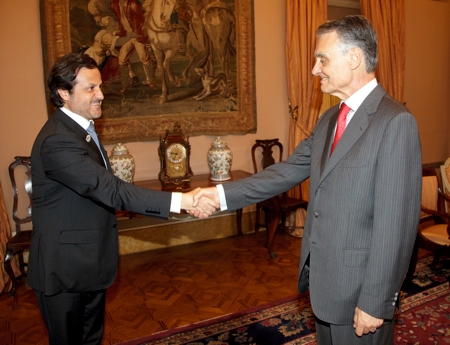
Last 21 April I was received by His Excellency, the President of the Portuguese Republic, Prof. Aníbal Cavaco Silva, at the Belém Palace, in Lisbon.

I had the opportunity, on the one hand, to introduce FDI World Dental Federation, highlighting its activities and projects, and on the other hand, I had the chance to present a set of concerns about Portuguese dentistry and oral health.

All of those items were positively welcomed by the President.

See more on the FDI website.


World Health Day – 7 April 2011

April 7, 2011

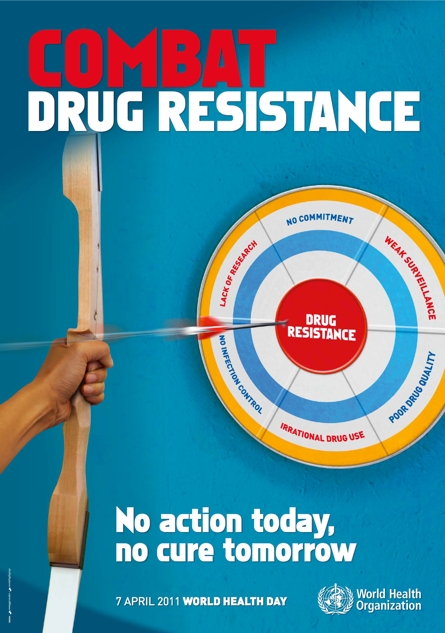
Antimicrobial resistance: no action today no cure tomorrow. FDI joins WHO call on Antimicrobial resistance. Read more here.


International Association of Dental Students

April 6, 2011
Babak Sayahpour and Artjom Meier

Babak Sayahpour and Artjom Meier

To be a dentist is also to be thirsty of new incomes and share experiences. And when this feeling begins while we are students, nothing can stop us. I remember very well my times at the university, and early a will of doing more and learn fast. That’s why it’s very easy for students to catch my attention and my support.

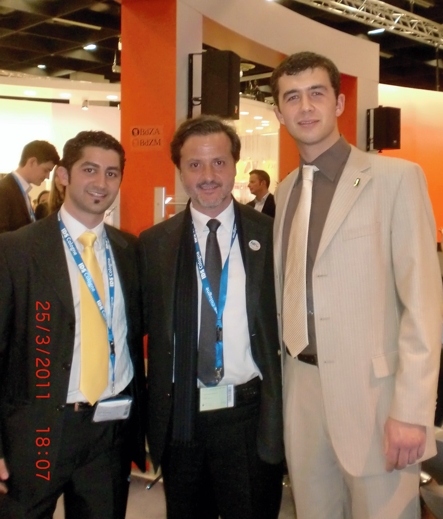
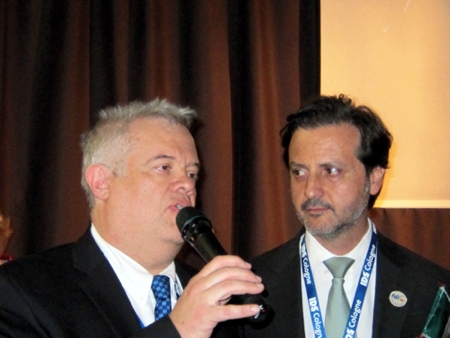
I met Babak Sayahpour and Artjom Meier from IADS – International Association of Dental Students, last IDS, in Cologne. They shared with me some of those feelings and the wish to involve all students around the world, believing that sharing experiences will make the difference not only as persons, but also as dentists.


34th International Dental Show

March 30, 2011

IDS is a recognizable brand in the dental market and its 34th edition was once more a place for important meetings and contacts.

I had the opportunity to participate in several important meetings in this huge International Dental Show, in Cologne, representing the FDI World Dental Federation, in my quality of President-elect.

I had meetings with FDI partner’s, from IDM, International Dental Manufacturers and with several stakeholders that were present in Cologne. And, of course, promoting our FDI Congress in Mexico, 14-17 Sept. 2011.

Our new Executive Director, Jean-Luc Eiselé, caused also a strong positive impression within FDI partners.

Dr. Jaime Edelson Tishman

Jaime Edelson, Asociación Dental Mexicana, President

Read the rest of this entry »


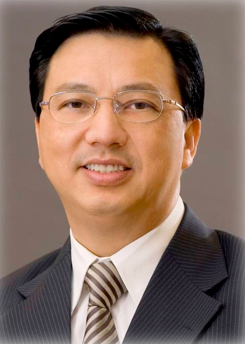
Message from the Minister of Health of Malaysia, Dato’ Sri Liow Tiong Lai

March 21, 2011

Minister of Health of Malaysia, Dato’ Sri Liow Tiong Lai

Minister of Health of Malaysia, Dato’ Sri Liow Tiong Lai

Introduction
Greetings from Malaysia. It is my great pleasure to post a short message in the esteemed newsletter of your Portuguese Dental Association.

Historical Tie between Malaysia and Portugal
The tie between Malaysia and Portugal can be traced back to 500 years ago in Malacca. Incidentally, I was born in Malacca and very familiar with the history between Portugal and Malacca. We still have a replica Portuguese ship showcased at the Malacca harbor and remnants of buildings dating back to the Portuguese era, not to mention the many Portuguese descendants in Malacca today.

Malaysia’s vision in Dentistry
Malaysia is a fast growing nation in Southeast Asia and the Asia Pacific Region, and the healthcare industry is an important growth area in our national economy. We plan to develop Dental Tourism and position Malaysia as a major regional player. Towards this end, we place great emphasis on continuing dental education and life-long learning to promote Malaysia as a centre of excellence for dental care. We will also be investing in new facilities to position Malaysia at the forefront of dental technology.

Malaysia’s drive to be a hub for international conferences
I have urged the Malaysian Dental Association (MDA) to also help position Malaysia as a centre of excellence for international conferences. Through the good office of the President of MDA, Dato’ Dr How Kim Chuan, we have successfully organized the 67th MDA AGM/FDI International conference as well as the 18th FDI/MDA International conference with resounding success.

Riding on this high note, we have successfully bid for the 2012 Commonwealth Dental Conference and 2013 Asia Pacific Dental Congress, and I am confident that these two conferences would be very successful as well.

Now I wish to express Malaysia’s wish to host the 2015 FDI World Dental Congress. Malaysia had hosted the FDI World Dental Congress in 2001 at around the same time as the 911 tragedy. Despite this mayhem, we successfully organized the congress with a large turnout of about 15,000 delegates. I am confident that we would be able to do even better if we were given the hosting right in 2015.

I wish to endorse the MDA’s bid for this FDI World Congress. The Ministry of Health as well as the Malaysian government would give our support to MDA for the bidding process. I also wish to urge the support of the FDI President Elect, Dr Orlando Monteiro Da Silva, and the Portuguese Dental Association in Malaysia’s bid, and your support as well for Malaysia’s candidacy in the FDI Council.

I would like to welcome all of you to visit Malaysia and assure you of our warmest Malaysian hospitality. Thank you.


Condolences to the people of Japan

March 18, 2011

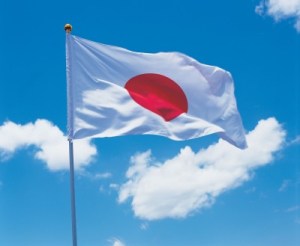
I would like to leave here a short word for the situation in Japan. I already expressed my deeply sadness to the President of the Japan Dental Association, Dr. Mitsuo Okubo and to Prof Masaki Kambara, FDI Councilor, for the tragic devastation brought by the earthquake and consequently the radioactive steam that is being relieve. It’s dramatic.
I have been kept attention for the follow-up of this nuclear catastrophe that caught the Japanese people, but I’m confident that all efforts would be made for Japan’s recover and rebuild.

I believe that an all-out rescue effort will be needed and that everyone could help in what may concern. I would like to sensitize all dentists that have availability and resources to help the victims that may need dental treatment and to assist in identifying victims through observation an analysis of the registration dental clinic.

My thoughts remain with the people of Japan.


Meeting with the president of the Portuguese opposition party

March 16, 2011

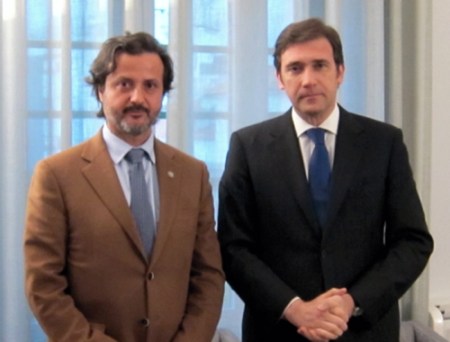
Last Monday, 7th March, I met with Dr. Pedro Passos Coelho, President of the Portuguese Social Democrat Party (PSD) and leader of the opposition in Portugal.

The meeting was very fruitful. We approached oral health in general, with updated data, and in particular the current professional situation of the Portuguese dentists and the Portuguese NHS.

I also had the opportunity to introduce the FDI World Dental Federation and to give him a general vision of dentistry around the world.

The PSD President has shown a strong knowledge of the health sector, particularly in issues such as the sustainability of the Portuguese NHS I make a very positive assessment of this meeting.


Estimados europeos, ¡a nuestra salud!

February 23, 2011

english versionversão portuguesa

Hoy en día, la salud constituye la preocupación principal de la gente. Creo que los sistemas sanitarios deben enfrentar cuatro desafíos: pragmatismo, transversabilidad, responsabilización y sostenibilidad. El futuro de nuestra salud depende de ello.

El desafío del pragmatismo

En política, por fuerza de las circunstancias, la ideología gradualmente va cediendo terreno al pragmatismo. El significado de la palabra pragmatismo (“doctrina por la cual las cuestiones prácticas son el criterio del saber, al contrario del intelectualismo”) es bien elocuente. En efecto, la política se ocupa cada vez más de aspectos que afectan la vida diaria de las personas, tales como la salud, la educación y la seguridad social, entre otros. A título de ejemplo, las reformas sanitarias propuestas por Barak Obama jugaron un papel esencial en las últimas elecciones presidenciales de EEUU. Del mismo modo, en la UE las reformas de los sistemas sanitarios forman el núcleo de las agendas políticas de varios países.

El pragmatismo evita que las políticas sanitarias se vean irremediablemente afectadas por efímeros aspectos ideológicos, por los “ismos” que tantas desgracias han provocado en el mundo entero y que no permiten la aplicación de las soluciones sanitarias más adecuadas. Cuando el debate se convierte en una disputa partidaria, dependiente de cuestiones presupuestarias y ciclos electorales, se ponen en causa o se postergan las soluciones.

El desafío de la transversabilidad

De acuerdo con la Organización Mundial de la Salud, “las acciones de promoción de la salud se llevan a cabo todos los días e incluyen iniciativas que comprometen recursos sociales, personales y físicos, además de intervenciones para combatir enfermedades”. La mejoría global de las condiciones sanitarias debe apoyarse en factores básicos, como niveles razonables de ingresos, buenas condiciones de vida y alimentación adecuada, así como acceso a la información, adquisición de competencias sociales, existencia de un mercado con oferta de productos, servicios y equipamientos saludables, y condiciones económicas, sociales y medioambientales de fomento a la salud.

En la actualidad, se puede observar que las enfermedades no transmisibles más comunes, como las enfermedades cardiovasculares, el cáncer y las deficiencias respiratorias crónicas, comparten varios factores de riesgo: tabaquismo, alcoholismo, sedentarismo y dieta inadecuada. Estos factores de riesgo están determinados por factores económicos, sociales, de género, políticos, de comportamiento y medioambientales, y exigen respuestas multisectoriales que los sistemas sanitarios nacionales deben ser capaces de coordinar. Debido a su prevalencia e incidencia en todas las regiones del mundo, ellos constituyen también un enorme problema de salud pública que, como es el caso de toda enfermedad, afectan a los grupos más desfavorecidos y socialmente marginalizados de la población.

Estas enfermedades crónicas, sumadas a la tecnología, la falta de información y el envejecimiento de la población, someten a los sistemas sanitarios de los países más desarrollados a una presión cada vez mayor. Y estas presiones, que a su vez desembocan en una restricción de los servicios prestados por los sistemas de salud pública, no dependen de la eficacia ni de la eficiencia de estos. Por tanto, es necesario abordar la salud de una forma transversal y desde diferentes perspectivas, que tomen en cuenta otros aspectos, como la educación, la acción social, la educación cívica y la economía como un todo. ¿Será que los gobiernos europeos se harán cargo de esta realidad?

El desafío de la responsabilización

Tengo la plena convicción de que los desafíos que enfrentan las sociedades de todo el mundo, como la salud, la educación y la seguridad social, no se reducen a una cuestión financiera sino que incluyen la conciencia civil y la educación. Es necesario llevar a cabo una actividad pedagógica en el seno de la población, para que las personas tengan conciencia de sus deberes y derechos. Creo que por lo menos una parte del debate y de la solución debe centrarse en la responsabilización, no sólo para definir los derechos de cada uno, sino para poner en marcha un mecanismo de reciprocidad con respecto a los deberes de quienes participan en la definición de políticas para nuestros sistemas sanitarios, así como a los deberes de toda la sociedad, de los usuarios, de los decisores y de los profesionales sanitarios. La falta de responsabilización actúa como un cáncer en los sistemas sanitarios.

El desafío de la sostenibilidad

Dar a todos el derecho a cuidar de su salud exige el cambio de varios paradigmas, y en particular concienciar a las personas de que la sanidad no es gratuita. Hoy en día, esta es una noción un tanto perversa relacionada con el comportamiento sociológico. Sin embargo, los servicios sanitarios son financiados indirectamente por todos, o al menos por la mayoría, a través de nuestros impuestos.
¡La salud del modelo europeo depende del liderazgo político o de nuestra capacidad de asumir una genuina ciudadanía europea!

Artículo de opinión publicado originalmente en la Euractiv, una red de publicaciones independentes que se ocupa de la actualidad de la Unión Europea.

english versionversão portuguesa