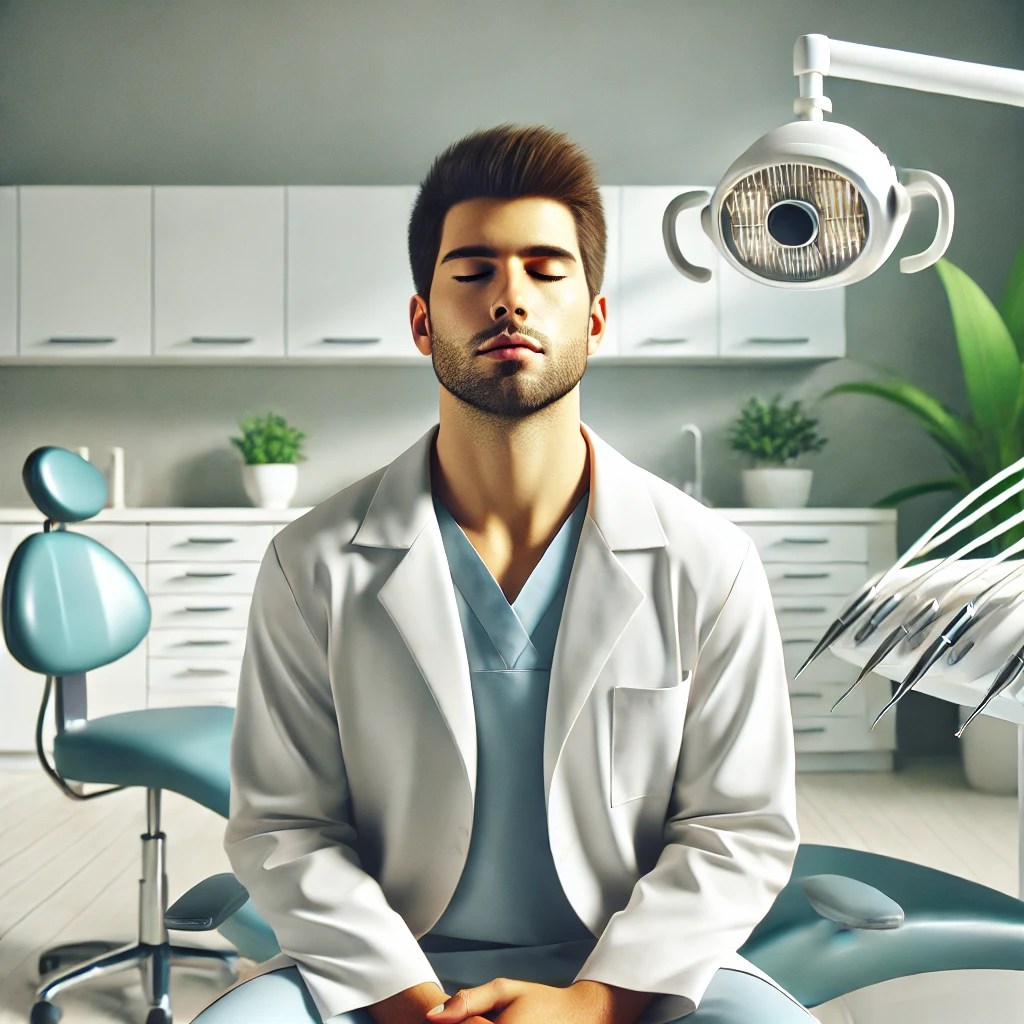
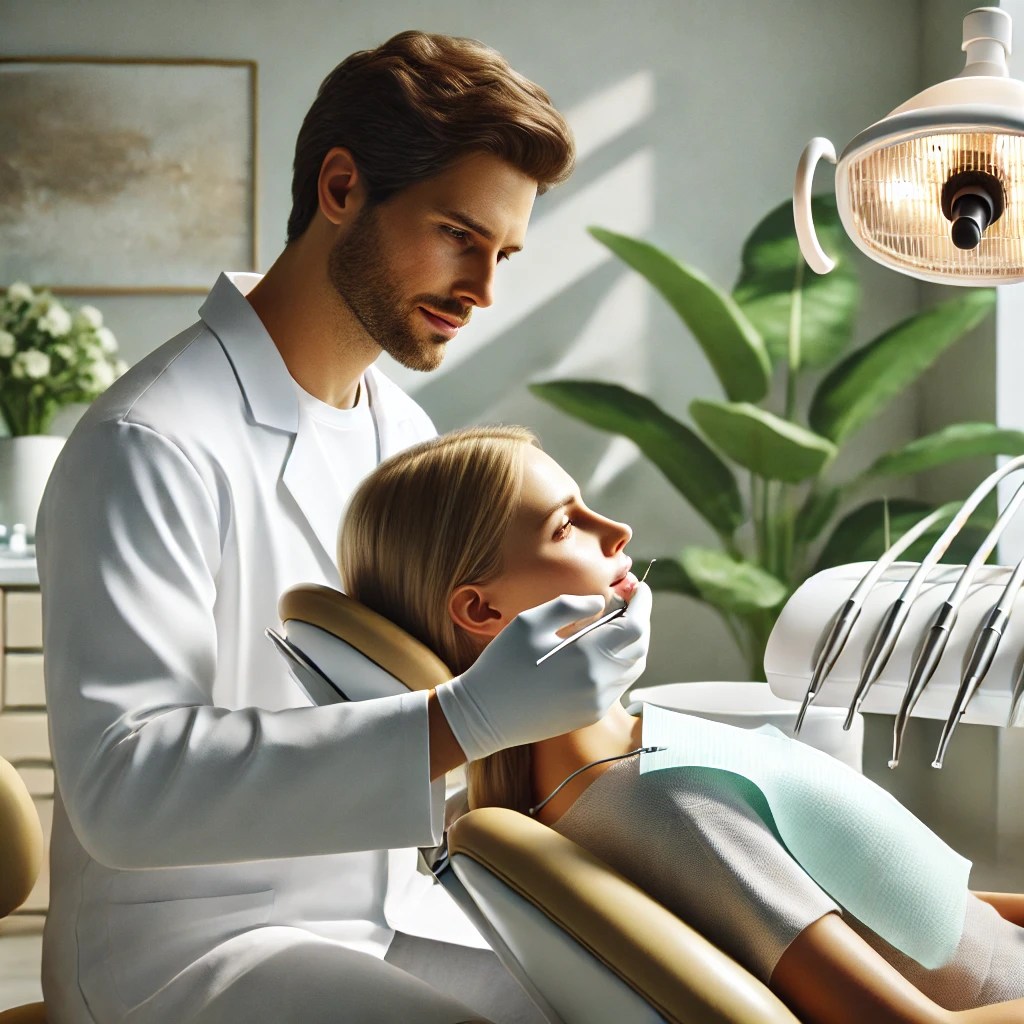
The Importance of Mindfulness in the Clinical Practice of The Dentist

October 25, 2024

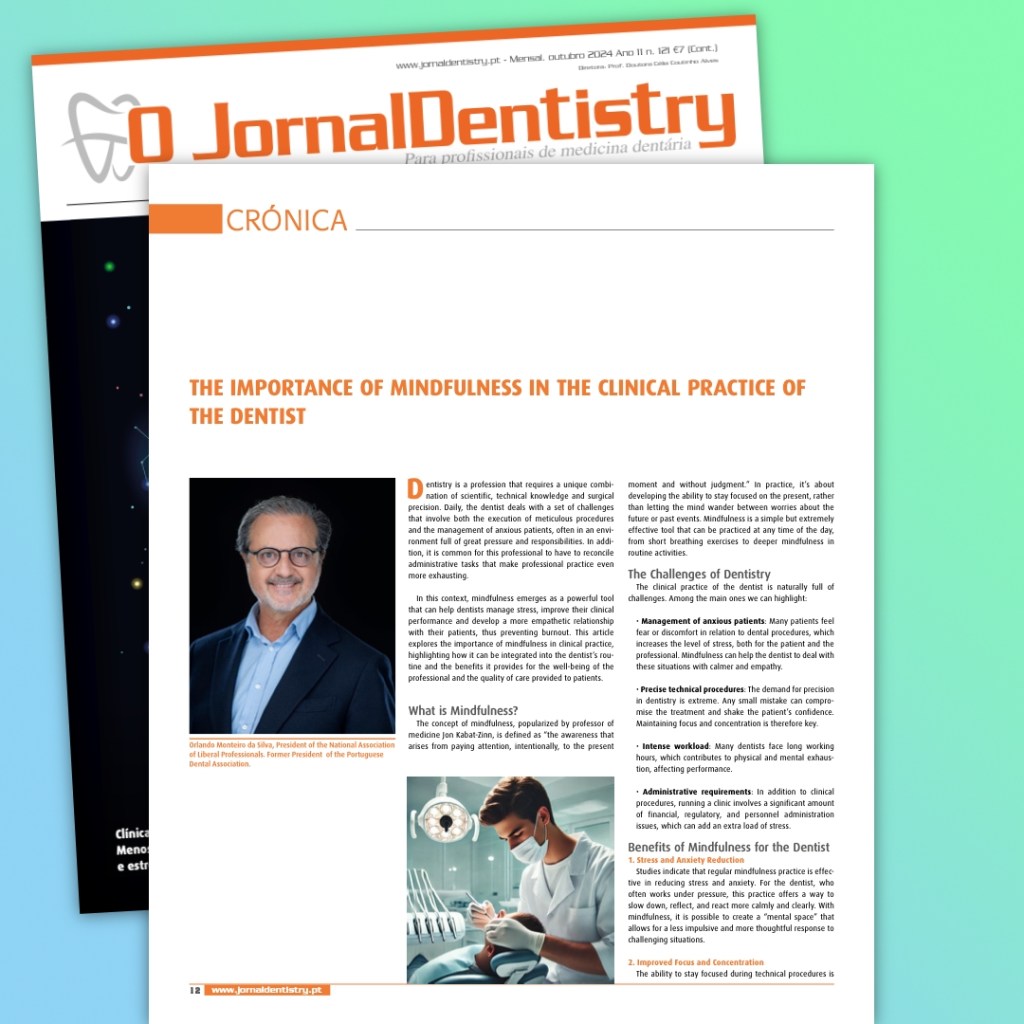
Dentistry is a profession that requires a unique combination of scientific, technical knowledge and surgical precision. Daily, the dentist deals with a set of challenges that involve both the execution of meticulous procedures and the management of anxious patients, often in an environment full of great pressure and responsibilities. In addition, it is common for this professional to have to reconcile administrative tasks that make professional practice even more exhausting.

In this context, mindfulness emerges as a powerful tool that can help dentists manage stress, improve their clinical performance and develop a more empathetic relationship with their patients, thus preventing burnout. This article explores the importance of mindfulness in clinical practice, highlighting how it can be integrated into the dentist’s routine and the benefits it provides for the well-being of the professional and the quality of care provided to patients.

What is Mindfulness?

The concept of mindfulness, popularized by professor of medicine Jon Kabat-Zinn, is defined as “the awareness that arises from paying attention, intentionally, to the present moment and without judgment.” In practice, it’s about developing the ability to stay focused on the present, rather than letting the mind wander between worries about the future or past events. Mindfulness is a simple but extremely effective tool that can be practiced at any time of the day, from short breathing exercises to deeper mindfulness in routine activities.

The Challenges of Dentistry

The clinical practice of the dentist is naturally full of challenges. Among the main ones we can highlight:

Management of anxious patients: Many patients feel fear or discomfort in relation to dental procedures, which increases the level of stress, both for the patient and the professional. Mindfulness can help the dentist to deal with these situations with calmer and empathy.

Precise technical procedures: The demand for precision in dentistry is extreme. Any small mistake can compromise the treatment and shake the patient’s confidence. Maintaining focus and concentration is therefore key.

Intense workload: Many dentists face long working hours, which contributes to physical and mental exhaustion, affecting performance.

Administrative requirements: In addition to clinical procedures, running a clinic involves a significant amount of financial, regulatory, and personnel administration issues, which can add an extra load of stress.

Benefits of Mindfulness for the Dentist

  1. Stress and Anxiety Reduction

Studies indicate that regular mindfulness practice is effective in reducing stress and anxiety. For the dentist, who often works under pressure, this practice offers a way to slow down, reflect, and react more calmly and clearly. With mindfulness, it is possible to create a “mental space” that allows for a less impulsive and more thoughtful response to challenging situations.

  1. Improved Focus and Concentration

The ability to stay focused during technical procedures is essential in dentistry. Mindfulness has been linked to strengthening the prefrontal cortex, the area of the brain responsible for attention and concentration. Dentists who practice mindfulness tend to develop a greater ability to stay focused for prolonged periods, which translates into fewer clinical serrors and better treatment outcomes.

  1. Emotional Regulation

In addition to helping with stress management, mindfulness also contributes to more effective emotional regulation.

In situations of tension with patients or when procedures do not go as expected, the dentist who practices mindfulness is better able to pause before reacting, resulting in more controlled and empathetic responses.

  1. Development of Empathy

Mindfulness promotes active listening and empathy, essential soft skills for the relationship between the dentist and the patient. Being “present” during consultations allows the professional to better understand the concerns and anxieties of their patients, creating a relationship of trust that facilitates treatment.

Mindfulness in Clinical Practice

Improved Patient Care

Mindfulness not only improves the well-being of the dentist, but also positively affects the patient experience. A calmer, more focused, and empathetic dentist conveys security to his patients, especially the most anxious, promoting a more collaborative service and a more positive experience.

Reduction of Errors in Procedures

Complex clinical procedures require maximum concentration. Mindfulness helps the dentist to stay focused throughout the procedure, reducing the risk of errors and improving results.

Improvement in Time Management

The practice of mindfulness can also help in efficient time management, a crucial skill in the dental clinic. By prioritizing what really matters and avoiding unnecessary distractions — such as excessive use of technology or multitasking — the dentist can better organize his activities, optimizing time for procedures and administrative tasks.

Mindfulness in Clinic Management

In addition to benefiting clinical practice, mindfulness is also useful in the management of the dental clinic. The decision-making process, often carried out under pressure, becomes clearer and more thoughtful with the practice of mindfulness. The creation of a mental space allows the dentist to analyse situations calmly, leading to more strategic and well-founded decisions, from personnel management to financial issues.

Mindfulness = Burnout Prevention

Burnout is a common problem among healthcare professionals, and dentists are no exception. The combination of long working hours with clinical and administrative responsibilities can lead to physical and emotional burnout. Regular mindfulness practice helps prevent burnout by promoting
emotional self-regulation and the ability to cope with stress in a healthy way.

How to Incorporate Mindfulness into the Dentist’s Routine

Incorporating mindfulness into everyday life doesn’t require major changes. Simple techniques can be practiced throughout the day, providing considerable benefits:

Mindful breathing: Taking a few minutes before a procedure or during breaks to focus on breathing can help reduce stress and increase focus.

Conscious transitions: Use moments of transition, such as walks between rooms, or breaks to refocus the mind and be more present at the next task.

Limit technology use: Establishing specific times to check email and turn off notifications during procedures can reduce distractions and help stay focused.

Conclusion

Mindfulness offers the dentist a valuable set of tools to deal with the daily challenges of their profession. In addition to promoting emotional well-being and improving focus, mindfulness contributes to more efficient clinical practice, increasing the quality of care offered to patients and preventing burnout.

Incorporating mindfulness into the dentist’s daily routine is an investment in mental health and excellence in clinical practice, resulting in a more balanced and satisfying professional activity.

You can read the full article, in Portuguese or English, in the Portuguese monthly edition of Dentistry magazine:

Open the English version of the article (pdf).

Open the Portuguese version of the article (pdf).


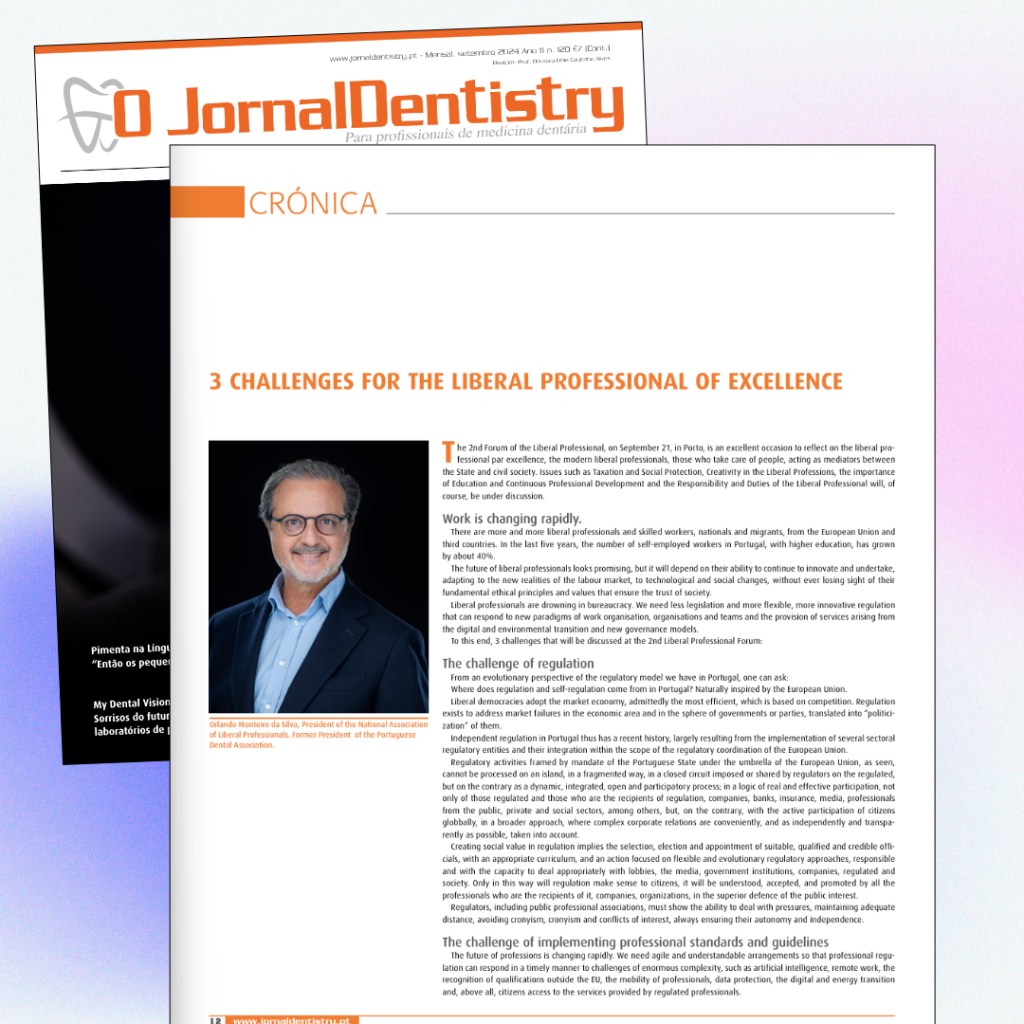
3 Challenges for the liberal professional of excellence

September 26, 2024

The 2nd Forum of the Liberal Professional, on September 21, in Porto, is an excellent occasion to reflect on the liberal professional par excellence, the modern liberal professionals, those who take care of people, acting as mediators between the State and civil society. Issues such as Taxation and Social Protection, Creativity in the Liberal Professions, the importance of Education and Continuous Professional Development and the Responsibility and Duties of the Liberal Professional will, of course, be under discussion.

Work is changing rapidly

There are more and more liberal professionals and skilled workers, nationals and migrants, from the European Union and third countries. In the last five years, the number of self-employed workers in Portugal, with higher education, has grown by about 40%.

The future of liberal professionals looks promising, but it will depend on their ability to continue to innovate and undertake, adapting to the new realities of the labour market, to technological and social changes, without ever losing sight of their fundamental ethical principles and values that ensure the trust of society.

Liberal professionals are drowning in bureaucracy. We need less legislation and more flexible, more innovative regulation that can respond to new paradigms of work organisation, organisations and teams and the provision of services arising from the digital and environmental transition and new governance models.

To this end, 3 challenges that will be discussed at the 2nd Liberal Professional Forum:

The challenge of regulation

From an evolutionary perspective of the regulatory model we have in Portugal, one can ask:
Where does regulation and self-regulation come from in Portugal? Naturally inspired by the European Union.

Liberal democracies adopt the market economy, admittedly the most efficient, which is based on competition. Regulation exists to address market failures in the economic area and in the sphere of governments or parties, translated into “politicization” of them.

Independent regulation in Portugal thus has a recent history, largely resulting from the implementation of several sectoral regulatory entities and their integration within the scope of the regulatory coordination of the European Union.

Regulatory activities framed by mandate of the Portuguese State under the umbrella of the European Union, as seen, cannot be processed on an island, in a fragmented way, in a closed circuit imposed or shared by regulators on the regulated, but on the contrary as a dynamic, integrated, open and participatory process; in a logic of real and effective participation, not only of those regulated and those who are the recipients of regulation, companies, banks, insurance, media, professionals from the public, private and social sectors, among others, but, on the contrary, with the active participation of citizens globbally, in a broader approach, where complex corporate relations are conveniently, and as independently and transparently as possible, taken into account.

Creating social value in regulation implies the selection, election and appointment of suitable, qualified and credible officials, with an appropriate curriculum, and an action focused on flexible and evolutionary regulatory approaches, responsible and with the capacity to deal appropriately with lobbies, the media, government institutions, companies, regulated and society.

Only in this way will regulation make sense to citizens, it will be understood, accepted, and promoted by all the professionals who are the recipients of it, companies, organizations, in the superior defence of the public interest. Regulators, including public professional associations, must show the ability to deal with pressures, maintaining adequate distance, avoiding cronyism, cronyism and conflicts of interest, always ensuring their autonomy and independence.

The challenge of implementing professional standards and guidelines

The future of professions is changing rapidly. We need agile and understandable arrangements so that professional regulation can respond in a timely manner to challenges of enormous complexity, such as artificial intelligence, remote work, the recognition of qualifications outside the EU, the mobility of professionals, data protection, the digital and energy transition and, above all, citizens access to the services provided by regulated professionals.

One of the regulatory instruments that professional associations and associations have at their disposal, most valued by society and by the various operators, consumers and customers in general, is the issuance of standards of good practice and quality parameters in the provision of services.

In this sense, the impact of regulatory activities should, in this concept, be oriented towards identifiable, measurable and tangible results by citizens, based on the performance of the recipients of regulation, through standards and guidelines selected by prior collection of information, promoting good practices and quality, leading to changes in behaviour and processes of all recipients of regulation and society in general.

It is also crucial, from a perspective of valuing regulation for the benefit of society, that the updating and continuous training paths are completed by professionals and made available for consultation by citizens.

I would continue with the 3rd and last challenge of the Liberal Professional of Excellence: that of Ethics and Deontology, that of meeting the demands of society in terms of the treatment of complaints of malpractice and that of conflict between professionals.

In teams of professionals, error and malpractice are often the result of an entire process, and less of an isolated professional. Quite apart from individual responsibility, which must naturally be punished, here too, inter-professional structures in the field of ethics and ethics would respond with better quality to the recipients of the services who legitimately address the professional regulators with their complaints.

The ethics of the professions must, in an analogous way, be complied with through codes of good practice in the companies and public and private organizations where the professionals are inserted, publicly identifying the organizations where compliance with the precepts of professional ethics is effective.

Summarizing

The fundamental result is that the regulatory and legislative activities of the various operators, framed by the mandate of the Portuguese State under the umbrella of the European Union, are not processed on an island, in a closed circuit imposed or shared by regulators on the regulated (professionals, companies, organizations, recipients of services, consumers), but, on the contrary, as a dynamic, integrated process, open, in a logic of active participation of citizens in the global, in a broad approach, where complex societal relations are conveniently, and as independently and transparently as possible, taken into account.

In short, a regulation that creates value for society.

We cannot continue to blindly apply competition law tout court to the liberal professions; this interpretation of competition laws has had disastrous effects in Portugal and in several countries of the European Union in affecting the role of small practices, offices and local offices.

They have largely disappeared with serious social consequences: accessibility has decreased, liberal professionals lose income, they became proletarianized.

You can read the full article, in Portuguese or English, in the Portuguese monthly edition of Dentistry magazine:

Open the English version of the article (pdf).

Open the Portuguese version of the article (pdf).


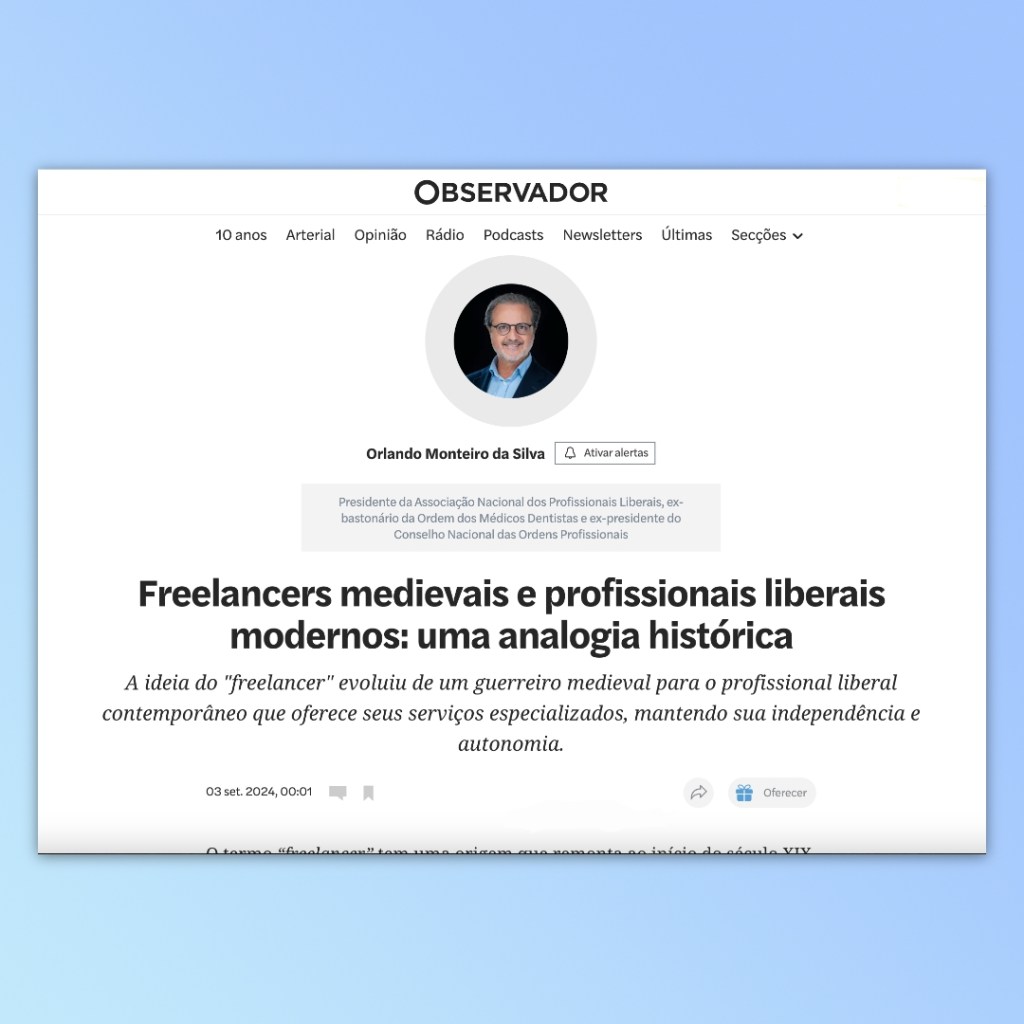
Freelancers medievais e profissionais liberais modernos: uma analogia histórica

September 3, 2024

Apesar das diferenças contextuais, existem semelhanças notáveis entre os freelancers medievais e os profissionais liberais modernos. Ambos os grupos valorizam a independência e a flexibilidade, preferindo operar fora das amarras de uma estrutura hierárquica rígida. Nos tempos medievais, um guerreiro freelancer podia mudar de Senhor conforme as oportunidades surgiam, da mesma forma que o profissional liberal moderno pode escolher seus clientes e projetos.

A relação com os clientes também é um ponto de convergência. Assim como os freelancers medievais precisavam manter uma boa reputação para garantir futuras contratações, os profissionais liberais de hoje dependem fortemente de suas redes de contato e da qualidade do seu trabalho para assegurar a continuidade dos seus serviços e negócios.

Consulte o artigo completo publicado no jornal Observador a 3 de setembro de 2024.


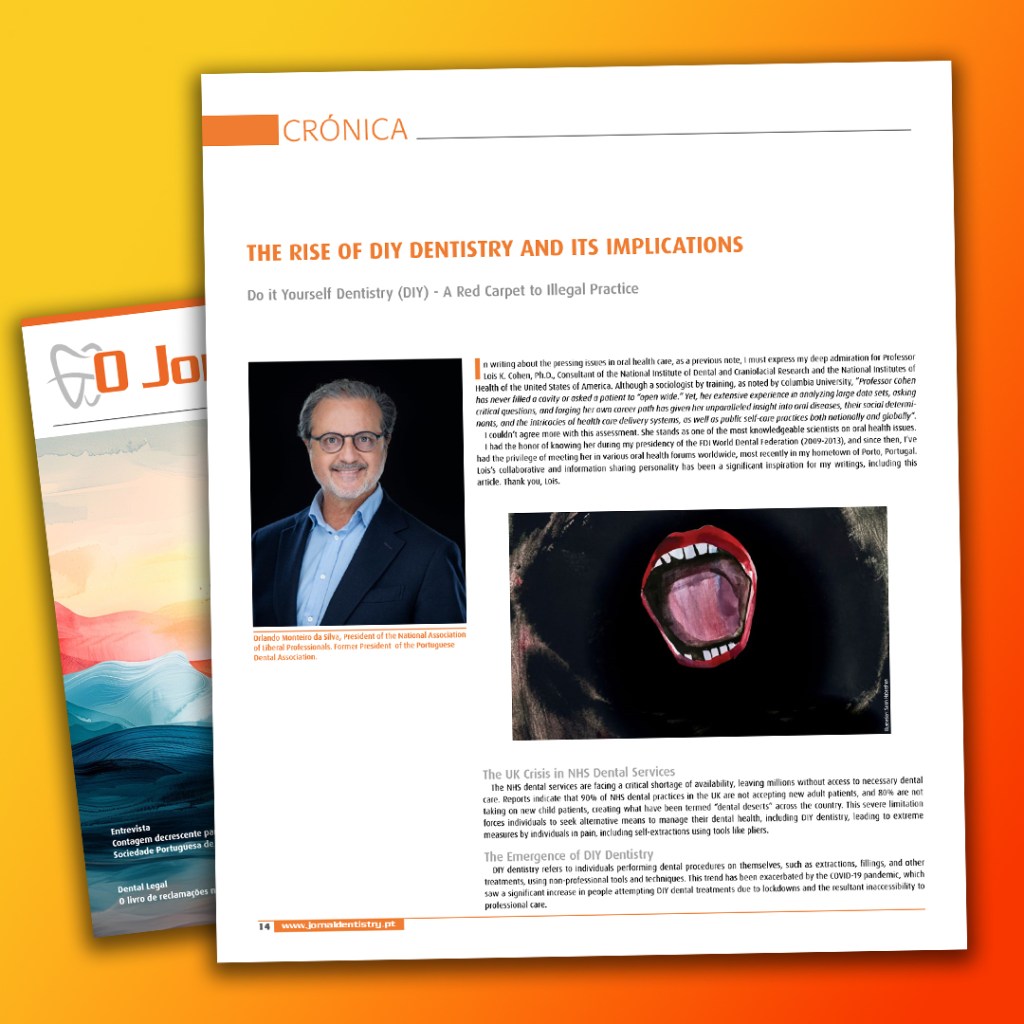
The rise of DIY dentistry and its implications

July 20, 2024

Do it Yourself Dentistry (DIY) – A Red Carpet to Illegal Practice

In writing about the pressing issues in oral health care, as a previous note, I must express my deep admiration for Professor Lois K. Cohen, Ph.D., Consultant of the National Institute of Dental and Craniofacial Research and the National Institutes of Health of the United States of America.

Although a sociologist by training, as noted by Columbia University, “Professor Cohen has never filled a cavity or asked a patient to “open wide.” Yet, her extensive experience in analyzing large data sets, asking critical questions, and forging her own career path has given her unparalleled insight into oral diseases, their social determinants, and the intricacies of health care delivery systems, as well as public self-care practices both nationally and globally”.

I couldn’t agree more with this assessment. She stands as one of the most knowledgeable scientists on oral health issues.

I had the honor of knowing her during my presidency of the FDI World Dental Federation (2009-2013), and since then, I’ve had the privilege of meeting her in various oral health forums worldwide, most recently in my hometown of Porto, Portugal. Lois’s collaborative and information sharing personality has been a significant inspiration for my writings, including this article. Thank you, Lois.

The UK Crisis in NHS Dental Services

The NHS dental services are facing a critical shortage of availability, leaving millions without access to necessary dental care. Reports indicate that 90% of NHS dental practices in the UK are not accepting new adult patients, and 80% are not taking on new child patients, creating what have been termed “dental deserts” across the country.

This severe limitation forces individuals to seek alternative means to manage their dental health, including DIY dentistry, leading to extreme measures by individuals in pain, including self-extractions using tools like pliers.

The Emergence of DIY Dentistry

DIY dentistry refers to individuals performing dental procedures on themselves, such as extractions, fillings, and other treatments, using non-professional tools and techniques. This trend has been exacerbated by the COVID-19 pandemic, which saw a significant increase in people attempting DIY dental treatments due to lockdowns and the resultant inaccessibility to professional care.

Dangers of DIY Dentistry

The practice of DIY dentistry poses numerous health risks, including infection, improper treatment, and exacerbation of existing dental issues. Without proper training and sterilization techniques, individuals are at high risk of severe complications. Additionally, DIY methods often fail to address underlying problems, leading to prolonged pain and suffering.

International Comparisons

While the UK faces a particularly acute crisis, other countries also experience similar issues. For example, in the United States, the lack of affordable dental care leads many to resort to DIY methods. This global trend underscores the need for systemic reforms in dental healthcare accessibility.

Reflecting on my home country, Portugal, I am reminded of the challenges we faced in the late 80s, 90s, and first decade this century to combat illegal and abusive practices by unqualified individuals. I never expected to witness a similar scenario in a developed nation like the UK.

This is not just a UK issue, but a trend seen in regions worldwide where shortages of healthcare personnel are significant challenges. Europe and the US, among others, face similar crises, highlighting that the lack of access to oral health care poses severe safety concerns globally.

Illegal Dental Practices

The rise of DIY dentistry could potentially lead to an increase in illegal dental practices. Unlicensed individuals may start offering dental services to others, posing as professionals. This not only undermines public trust in healthcare systems but also endangers the health of those receiving such treatments.

Addressing the Issue

To mitigate the risks associated with DIY dentistry and prevent illegal practices, several steps need to be taken:

  1. Increase Funding for NHS Dentistry: Adequate funding and reform of the NHS dental contract are crucial to ensure more practices can accept new patients and provide necessary care.
  2. Improve Access and Affordability: Policies aimed at reducing the cost of dental care and increasing the number of practicing dentists can help alleviate the current crisis.
  3. Public Awareness Campaigns: Educating the public about the dangers of DIY dentistry and promoting preventive care can help reduce the need for emergency interventions.
  4. Regulation and Enforcement: Strengthening regulations and enforcement against illegal dental practices will protect public health and ensure that dental care is provided by qualified professionals.
  5. Political Attention: The dental crisis has also been a significant topic in recent UK parliamentary elections. All major parties have expressed concerns and proposed solutions to address the issue. Prime Minister Rishi Sunak and the leader of the opposition, Sir Keir Starmer, have both emphasized the importance of tackling the dental care crisis, with both visiting dental practices to highlight his commitment to finding solutions. This bipartisan acknowledgment underscores the urgency of addressing the deficiencies in the dental care system to prevent further deterioration of public health.

Conclusion

The trend of DIY dentistry is a direct consequence of the inadequacies in current healthcare systems, particularly the NHS in the UK.

Addressing this issue requires com prehensive reforms to increase access to affordable dental care, educate the public on the risks of self-treatment, and prevent the emergence of illegal dental practices. Without these changes, the public health risks associated with DIY dentistry will continue to grow.

We cannot entirely exclude that a similar effect may replicate in other areas of medicine.

You can read the full article, in Portuguese or English, in the Portuguese monthly edition of Dentistry magazine:

Open the English version of the article (pdf).

Open the Portuguese version of the article (pdf).


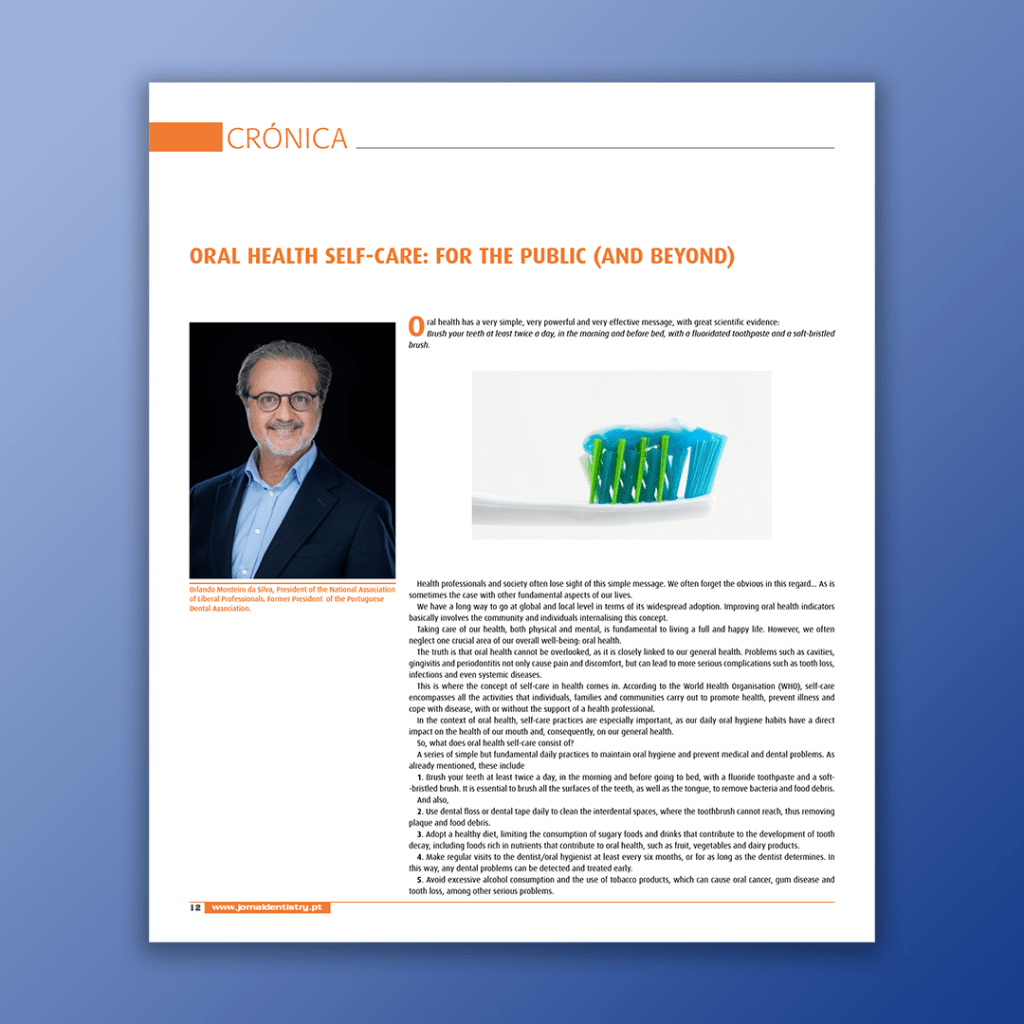
Oral Health Self-Care: For The Public (and Beyond)

June 27, 2024

Oral health has a very simple, very powerful and very effective message, with great scientific evidence: Brush your teeth at least twice a day, in the morning and before bed, with a fluoridated toothpaste and a soft-bristled brush.

Health professionals and society often lose sight of this simple message. We often forget the obvious in this regard… As is sometimes the case with other fundamental aspects of our lives.

We have a long way to go at global and local level in terms of its widespread adoption. Improving oral health indicators basically involves the community and individuals internalising this concept.

Taking care of our health, both physical and mental, is fundamental to living a full and happy life. However, we often neglect one crucial area of our overall well-being: oral health.

The truth is that oral health cannot be overlooked, as it is closely linked to our general health. Problems such as cavities, gingivitis and periodontitis not only cause pain and discomfort, but can lead to more serious complications such as tooth loss, infections and even systemic diseases.

This is where the concept of self-care in health comes in. According to the World Health Organisation (WHO), self-care encompasses all the activities that individuals, families and communities carry out to promote health, prevent illness and cope with disease, with or without the support of a health professional.

In the context of oral health, self-care practices are especially important, as our daily oral hygiene habits have a direct impact on the health of our mouth and, consequently, on our general health.

So, what does oral health self-care consist of?

A series of simple but fundamental daily practices to maintain oral hygiene and prevent medical and dental problems. As already mentioned, these include

  1. Brush your teeth at least twice a day, in the morning and before going to bed, with a fluoride toothpaste and a soft-bristled brush. It is essential to brush all the surfaces of the teeth, as well as the tongue, to remove bacteria and food debris.

And also,

  1. Use dental floss or dental tape daily to clean the interdental spaces, where the toothbrush cannot reach, thus removing plaque and food debris.
  2. Adopt a healthy diet, limiting the consumption of sugary foods and drinks that contribute to the development of tooth decay, including foods rich in nutrients that contribute to oral health, such as fruit, vegetables and dairy products.
  3. Make regular visits to the dentist/oral hygienist at least every six months, or for as long as the dentist determines. In this way, any dental problems can be detected and treated early.
  4. Avoid excessive alcohol consumption and the use of tobacco products, which can cause oral cancer, gum disease and tooth loss, among other serious problems.

And what are the benefits of oral health self-care?

In addition to preventing common dental problems such as tooth decay, gingivitis and halitosis (bad breath), oral health self-care has numerous benefits for our lives and for society in general.

  1. Significant economic savings
    By preventing dental problems through regular self-care, it is possible to avoid the high costs associated with treatments and rehabilitation procedures, such as fillings, root canal treatments , extractions and the placement of dental implants and other rehabilitation procedures.
  2. Increased productivity
    Good oral health can reduce the number of working or school days lost due to dental problems. Studies show that over-the-counter oral health products have resulted in approximately 40.8 billion productive days globally, equivalent to a welfare effect of 1.879 billion dollars.
  3. Improved quality of life
    Effective oral health self-care can lead to an estimated gain of 22 million quality-adjusted life years (QALYs) worldwide, reflecting better health status and reduced disability.

Several factors have contributed to the WHO’s emphasis on the importance of self-care in oral health:

  • Understanding individual behaviour
    Recognition of the crucial role of individual behaviour in disease prevention and management has grown, supported by the World Health Organization’s (WHO) focus on healthy behaviours and patient empowerment.
  • Person-centred care
    The emphasis on health literacy and empowerment is essential to enable individuals to take care of their oral health in an autonomous and informed way.
  • Digital tools
    The proliferation of digital tools, such as mobile applications and online resources, has expanded access to oral health information and services. However, improvements are needed to ensure equity in access to digital health, particularly in poorer communities.

To maximize the benefits of oral health self-care, it is essential to create an enabling environment, based on four main approaches:

  1. Support and adoption from all stakeholders
    Broad support from patients, consumers, healthcare professionals, regulators and policymakers is essential to maximise the adoption and value of oral health self-care products and behaviours.
  2. Empowering consumers and patients
    Empowering consumers and patients to understand their oral health, make informed decisions and use certified self-care products with confidence is crucial to the success of this approach.
  3. Self-care health policy
    Policymakers’ recognition of the economic value of products used in oral health self-care practices can foster policies that promote self-care as an affordable and sustainable health solution.
  4. Regulatory frameworks
    Effective regulations are needed to drive innovation, empower consumers and extract maximum value from self-care products for health systems.

    Self-care is critical for healthy ageing, aligning with WHO resolutions on aging and health, primary health care and oral health.

    In addition, self-care contributes directly to several of the United Nations’ Sustainable Development Goals (SDGs), including:
    Goal 3: Ensure healthy lives and promote well-being for
    all at all ages.
    Goal 1: Eradicate poverty in all its forms everywhere.
    Goal 10: Reduce inequality within and between countries

    A comprehensive international focus on self-care, along the lines of the WHO recommendations, could foster the momentum needed to fully integrate self-care into health systems for the benefit of individuals and society.

    Therefore, to get the most out of oral health self-care, it is essential to develop an effective policy framework that includes the following elements:

    • Clear definition of self-care and its value for national health systems, governments and person-centred approaches.
    • Encouraging member states to develop and implement national self-care strategies, guidelines or plans that address key enablers.
    • Guidance to member states on aligning resources, investments and policies to support a harmonised national self-care strategy.

    Therefore, to effectively integrate self-care into their health systems, Member States must:

    • Improve public health literacy and education by implementing awareness campaigns on self-care interventions for health and well-being.
    • Integrate and expand digital health tools for self-care in national health and social care systems.
    • Develop the capacity of health and social care professionals in relation to self-care by incorporating self-care practices into training modules and national guidelines.
    • Recognise self-care as a critical and transversal component of the care continuum and a facilitator of Universal Health Coverage.
    • Invest in policies that promote self-care practices as a means of reducing health expenditure and addressing gaps in the workforce.

    Conclusion:

    Oral health self-care represents a valuable opportunity to improve the sustainability of health systems, health outcomes and the quality of life of individuals.

    By adopting a comprehensive policy framework and promoting self-care practices, health systems can become more efficient and resilient, ultimately contributing to chieving the goal of Universal Health Coverage.

    Self-care empowers individuals, relieves pressure on healthcare providers and generates significant economic savings. Embracing self-care as a core component of healthcare delivery will require coordinated efforts from policymakers, healthcare professionals and civil society at large.

    By fostering an environment conducive to self-care, we can build healthier communities and sustainable health systems for the future.

    The dentist has a key role to play in this approach. We must never lose sight of this.

    You can read the full article, in Portuguese or English, in the Portuguese monthly edition of Dentistry magazine:

    Open the English version of the article (pdf).

    Open the Portuguese version of the article (pdf).


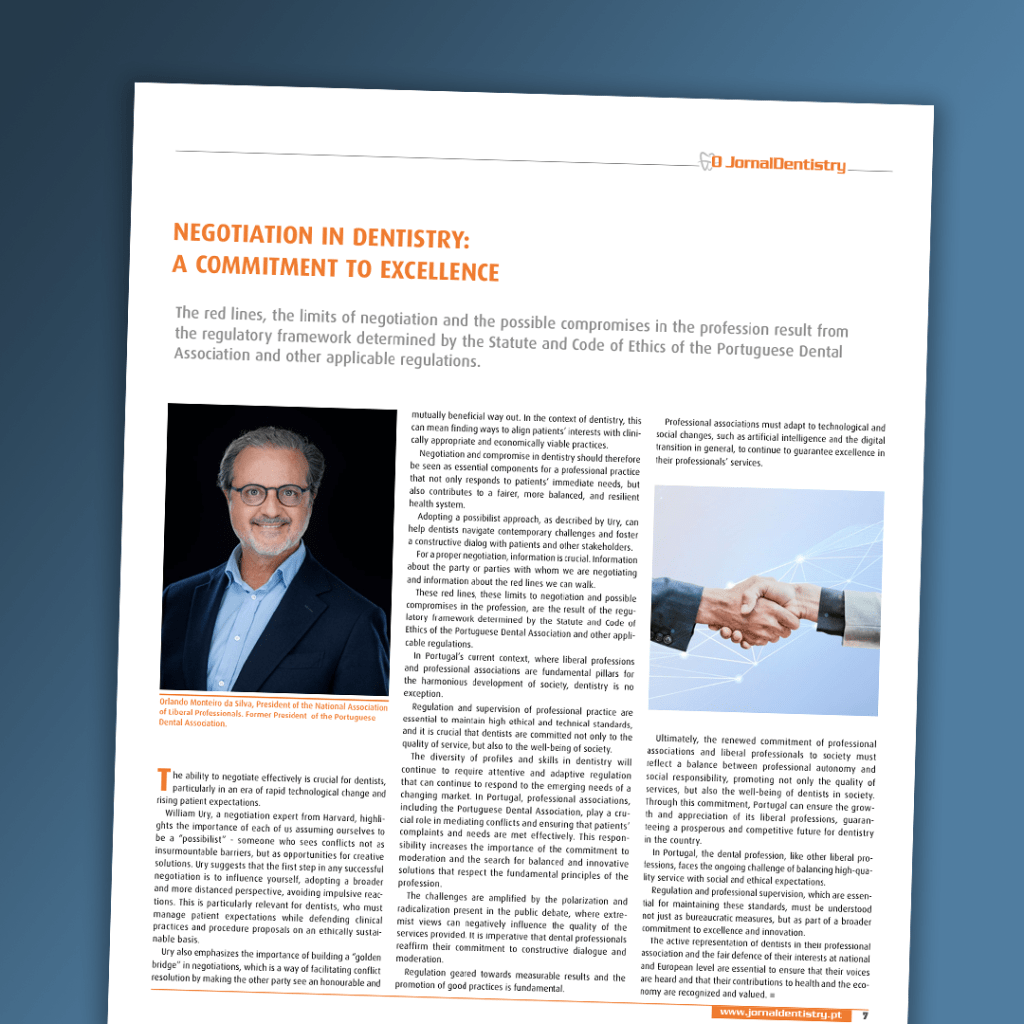
    Negotiation in dentistry: a commitment to excellence

    May 27, 2024

    The red lines, the limits of negotiation and the possible compromises in the profession result from the regulatory framework determined by the Statute and Code of Ethics of the Portuguese Dental Association and other applicable regulations.

    The ability to negotiate effectively is crucial for dentists, particularly in an era of rapid technological change and rising patient expectations.

    William Ury, a negotiation expert from Harvard, highlights the importance of each of us assuming ourselves to be a “possibilist” – someone who sees conflicts not as insurmountable barriers, but as opportunities for creative solutions.

    Ury suggests that the first step in any successful negotiation is to influence yourself, adopting a broader and more distanced perspective, avoiding impulsive reactions. This is particularly relevant for dentists, who must manage patient expectations while defending clinical practices and procedure proposals on an ethically sustainable basis.

    Ury also emphasizes the importance of building a “golden bridge” in negotiations, which is a way of facilitating conflict resolution by making the other party see an honourable and mutually beneficial way out. In the context of dentistry, this can mean finding ways to align patients’ interests with clinically appropriate and economically viable practices.

    Negotiation and compromise in dentistry should therefore be seen as essential components for a professional practice that not only responds to patients’ immediate needs, but also contributes to a fairer, more balanced, and resilient health system.

    Adopting a possibilist approach, as described by Ury, can help dentists navigate contemporary challenges and foster a constructive dialog with patients and other stakeholders.

    For a proper negotiation, information is crucial. Information about the party or parties with whom we are negotiating and information about the red lines we can walk.

    These red lines, these limits to negotiation and possible compromises in the profession, are the result of the regulatory framework determined by the Statute and Code of Ethics of the Portuguese Dental Association and other applicable regulations.

    In Portugal’s current context, where liberal professions and professional associations are fundamental pillars for the harmonious development of society, dentistry is no exception.

    Regulation and supervision of professional practice are essential to maintain high ethical and technical standards, and it is crucial that dentists are committed not only to the quality of service, but also to the well-being of society.

    The diversity of profiles and skills in dentistry will continue to require attentive and adaptive regulation that can continue to respond to the emerging needs of a changing market. In Portugal, professional associations, including the Portuguese Dental Association, play a crucial role in mediating conflicts and ensuring that patients’ complaints and needs are met effectively. This responsibility increases the importance of the commitment to moderation and the search for balanced and innovative solutions that respect the fundamental principles of the profession.

    The challenges are amplified by the polarization and radicalization present in the public debate, where extremist views can negatively influence the quality of the
    services provided. It is imperative that dental professionals reaffirm their commitment to constructive dialogue and moderation.

    Regulation geared towards measurable results and the promotion of good practices is fundamental.

    Professional associations must adapt to technological and social changes, such as artificial intelligence and the digital transition in general, to continue to guarantee excellence in their professionals’ services.

    Ultimately, the renewed commitment of professional associations and liberal professionals to society must reflect a balance between professional autonomy and social responsibility, promoting not only the quality of services, but also the well-being of dentists in society.

    Through this commitment, Portugal can ensure the growth and appreciation of its liberal professions, guaranteeing a prosperous and competitive future for dentistry in the country.

    In Portugal, the dental profession, like other liberal professions, faces the ongoing challenge of balancing high-quality service with social and ethical expectations.

    Regulation and professional supervision, which are essential for maintaining these standards, must be understood not just as bureaucratic measures, but as part of a broader commitment to excellence and innovation.

    The active representation of dentists in their professional association and the fair defence of their interests at national and European level are essential to ensure that their voices are heard and that their contributions to health and the economy are recognized and valued.

    You can read the full article, in Portuguese or English, in the Portuguese monthly edition of Dentistry magazine:

    Open the English version of the article (pdf).

    Open the Portuguese version of the article (pdf).


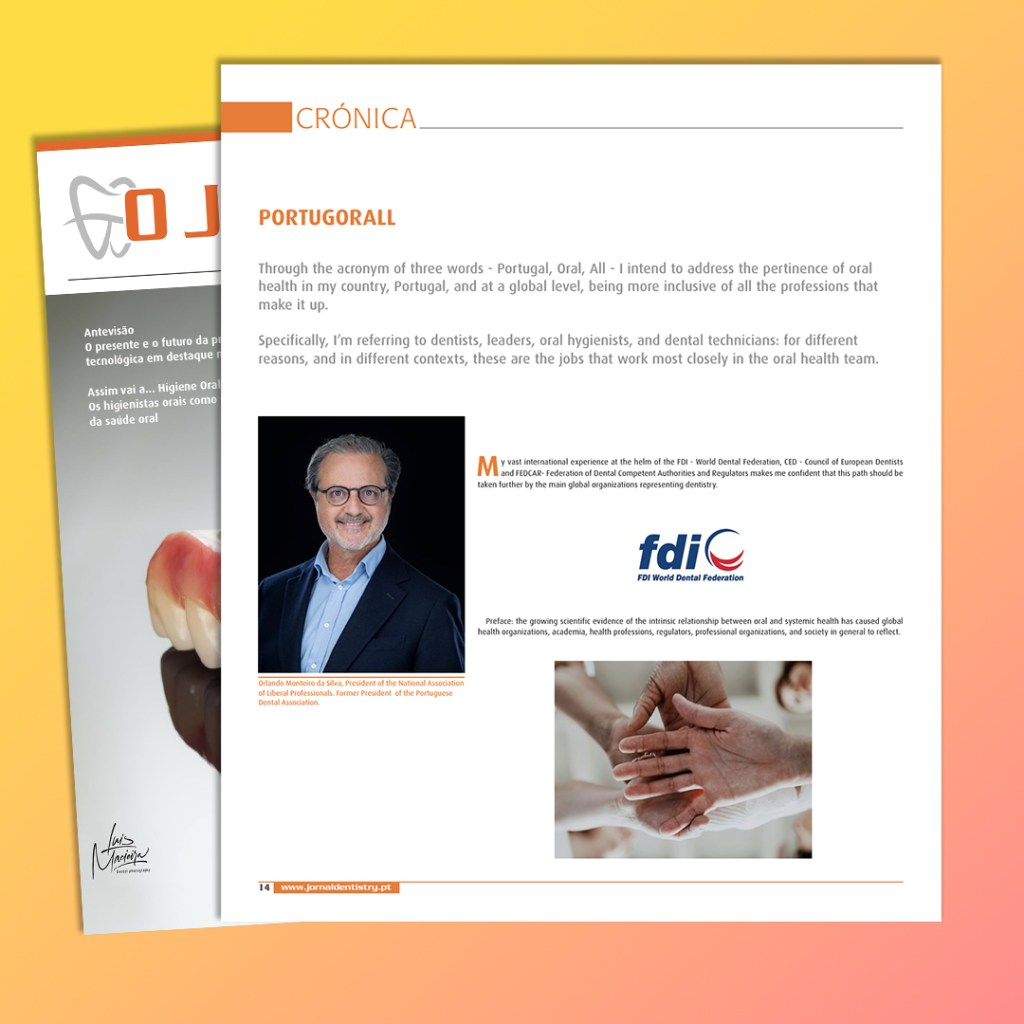
    Portugorall – Portugal, Oral, All

    May 4, 2024

    Through the acronym of three words – Portugal, Oral, All – I intend to address the pertinence of oral health in my country, Portugal, and at a global level, being more inclusive of all the professions that make it up.

    Specifically, I’m referring to dentists, leaders, oral hygienists, and dental technicians: for different reasons, and in different contexts, these are the jobs that work most closely in the oral health team.

    My vast international experience at the helm of the FDI – World Dental Federation, CED – Council of European Dentists and FEDCAR- Federation of Dental Competent Authorities and Regulators makes me confident that this path should be taken further by the main global organizations representing dentistry.

    Preface: the growing scientific evidence of the intrinsic relationship between oral and systemic health has caused global health organizations, academia, health professions, regulators, professional organizations, and society in general to reflect.

    Patients and their organizations, as well as insurers and public and private funding systems, have taken this integrated approach to oral health into account. Nothing could be more right and proper.

    Involving family doctors in the context of the desirable inclusion of oral health in primary health care, in a universal coverage approach, with their collaboration:

    • nutritionists, given the widespread sharing and relationship between nutrition and oral health,
    • psychologists, now that everyone is aware of the impact and relationship of oral health on mental health and vice versa. In the latter case, it would be enough to take into account the impact of addictions to various substances on oral health;
    • also in terms of temporomandibular joint pathology, TMJ, bruxism and occlusal problems and their relationship with physiotherapy, sleep medicine and neurology.

    And other collaborations could be identified with nurses, pediatricians, speech therapists, etc. examples of this relationship between oral and systemic health in various areas of health.

    But with so much looking around, we’re perhaps forgetting to look inwards, at the oral health team with whom we work every day.

    Note that the “Global Report on the State of Oral Health: Towards Universal Health Coverage for Oral Health by 2030” presents a comprehensive overview of the challenges and opportunities in the field of oral health globally.

    The World Health Organization (WHO) highlights that oral diseases are among the most common non-communicable diseases, affecting approximately 3.5 billion people worldwide.

    These diseases are, as an obvious result, dental caries, and periodontal disease, which are largely preventable through educational, preventive, and clinical interventions, along with approaches to combat risks common to all chronic diseases.

    The report points to the need to include oral health services in publicly funded national health coverage services, accessible free of charge or at a cost that people can afford.

    In addition, it describes the main determinants and risk factors of oral diseases, including sugar consumption, tobacco use and excessive alcohol consumption.

    This approach highlights the fact that chronic diseases and some pathologies of the oral cavity share a set of risk factors that can be conditioned or altered.

    Oral hygienists, who are true experts in prevention, play an essential role in the prophylactic and educational approach and in oral health literacy.

    On the other hand, in the rehabilitation of edentulism and tooth loss, the device developed by Dental Prosthesis Technicians (DPT) is crucial.

    As such, while not being exhaustive, because these senior health technicians, OH and DPT, are broader in their professional scope than described collaboration and dialog between dentistry and these oral health jobs is fundamental.

    It would be highly advisable to establish permanent contact platforms between these different professional profiles, for the sake of patients and users.

    True alliances for oral health.

    In conclusion:

    Yes, it is essential to look at interprofessional collaboration with other areas of health. It certainly is. But we can’t leave behind dialog and interaction with those who work with us every day to prevent, treat and rehabilitate diseases of the oral cavity.

    The major international and national organizations that represent and regulate oral health must include the medicine of oral hygienists and dental technicians with dental medicine.

    In the name of excellent interdisciplinary oral health: PortugOralL.

    You can read the full article, in Portuguese or English, in the Portuguese monthly edition of Dentistry magazine:

    Open the English version of the article (pdf).

    Open the Portuguese version of the article (pdf).


    A minha Saúde, o meu Direito… O meu Dever.

    April 22, 2024

    O tema do Dia Mundial da Saúde 2024 comemorado a 7 de abril, “A minha saúde, o meu direito”, destaca a necessidade urgente de garantir acesso universal a serviços de saúde de qualidade e a um ambiente saudável.

    Tudo muito bem. Não se poderia estar mais de acordo. Em Portugal, o artigo 64º da Constituição, no seu nº 1 refere, “Todos têm direito à proteção da saúde e o dever de a defender e promover”. Seguidamente o nº 2 descreve as formas pelas quais este direito é realizado, através de um serviço nacional de saúde universal e geral e, tendencionalmente gratuito e pela melhoria das condições económicas, sociais, culturais e ambientais.

    Em fase inicial de implementação de políticas de saúde por um novo governo que acaba de tomar posse é fundamental focarmo-nos não apenas nos direitos, mas também nos deveres. Aliás, uma palavra deveria sempre estar ligada à outra. Onde há direitos, há necessariamente deveres implicados.
    Em particular nas sociedades mais desenvolvidas, onde a saúde é frequentemente vista sob a lente da medicina e da ciência, é crucial relembrar que a saúde é, acima de tudo, um direito humano fundamental e inalienável de cada indivíduo, mas de igual forma um dever individual e coletivo.

    Vejamos alguns conceitos que genericamente serão com certeza levados em conta numa estratégia de governação que se pretende capaz de fazer do nosso SNS um sistema harmónico, responsivo que assegure com a ajuda de todos, públicos, privados e social, ao nível central e local acesso a cuidados de saúde e na doença, de qualidade, numa perspetiva inovadora, onde ninguém fique “pendurado” … Um exemplo, a prática privada liberal, convencionada com o SNS e financiada com base em resultados poderia ser uma resposta adequada ás listas de espera intermináveis no SNS para algumas áreas de especialidade médica, tais como psiquiatria e psicologia, otorrinolaringologia, dermatologia, oftalmologia e medicina dentária.

    A Saúde como Direito

    Universalidade e Igualdade – a saúde é reconhecida como um direito universal nas Declarações dos Direitos Humanos. Tal significa que cada pessoa, independentemente da sua origem, estatuto socioeconómico, idade, género ou qualquer outra característica, tem o direito de aceder a cuidados de saúde de qualidade. Esta universalidade sublinha a igualdade fundamental entre todos os seres humanos em relação ao seu bem-estar e saúde.

    Base para Outros Direitos – a saúde é a fundação sobre a qual muitos outros direitos humanos se apoiam. Sem saúde, a capacidade de uma pessoa participar plenamente na sociedade, trabalhar, aprender e viver uma vida plena e produtiva fica severamente comprometida. Assim, garantir o direito à saúde é também proteger e promover outros direitos humanos fundamentais.

    Determinantes Sociais da Saúde – o reconhecimento da saúde como um direito implica a compreensão dos determinantes sociais que influenciam o bem-estar dos indivíduos. Estes incluem condições de vida e trabalho, acesso a educação, alimentação adequada, habitação, meio ambiente saudável e acesso à informação. Portanto, a saúde transcende a mera ausência de doença, abrangendo um estado completo de bem-estar físico, mental e social.

    Determinantes Comerciais da Saúde-os agentes comerciais e industriais são relevantes para a saúde, bem-estar e qualidade de vida. As formas de atuação destes agentes comerciais, empresas, farmacêuticas e fabricantes de dispositivos médicos têm impacto na saúde das pessoas e das comunidades. Nomeadamente nas doenças crónicas mais prevalentes e sua prevenção e nas alterações climáticas a outro nível. É fundamental por exemplo envolver a indústria de nutrição, a do digital e das tecnologias de informação e comunicação para ajudar no combate à doença e promoção de estilos de vida saudáveis.

    A Saúde como Dever

    Responsabilidade Individual e Coletiva – responsabilidade individual de cuidar da própria saúde através de escolhas de vida saudáveis e comportamentos preventivos. Simultaneamente, é um dever coletivo, que envolve a sociedade em proporcionar condições que permitam e incentivem estilos de vida saudáveis para todos os seus membros.

    Solidariedade e Justiça Social – conceito de saúde como um dever reflete estes valores. Significa que os mais afortunados na sociedade partilham a responsabilidade de garantir que os menos privilegiados tenham acesso aos cuidados de saúde necessários. Isto é realizado através de sistemas de saúde pública financiados coletivamente, políticas de saúde que visam a equidade e programas que abordam os determinantes sociais da saúde.

    Prevenção e Educação para a Saúde – um aspeto fundamental do dever para com a saúde é o foco na prevenção de doenças e na promoção da saúde. As autoridades de saúde pública, as organizações não-governamentais e cada indivíduo têm um papel a desempenhar na educação sobre saúde e na implementação de práticas de vida saudáveis. A prevenção, mais do que o tratamento, é a chave para uma sociedade saudável e sustentável.

    Literacia para a saúde – a literacia em saúde traduz a capacidade de usar as competências de aceder, compreender e avaliar a informação em saúde, aplicando‐as no dia‐a‐dia para a tomada de decisão em diferentes contextos, tendo em conta as escolhas possíveis. Inclui ainda a capacidade de participação social dos indivíduos nas escolhas e decisões políticas dos sistemas de saúde. A literacia induz capacidade para tomar decisões de qualidade individuais e coletivas.

    Autocuidados em saúde – representam a capacidade de indivíduos, famílias e comunidades promoverem saúde, prevenir doenças, manterem o bem-estar e lidar com doenças e incapacidades, quer contem com o apoio de profissionais de saúde, quer não.

    Em suma, a saúde é tanto um direito humano básico como um dever coletivo e individual. O seu reconhecimento como direito enfatiza a necessidade de sistemas de saúde acessíveis, de qualidade e equitativos. Como dever, sublinha a importância da solidariedade, justiça social e prevenção. Juntos, estes princípios formam a base para sociedades mais saudáveis, justas e prósperas, onde o bem-estar de cada indivíduo é valorizado e protegido.

    Artigo publicado originalmente a 6 de abril de 2024 na publicação Health News.


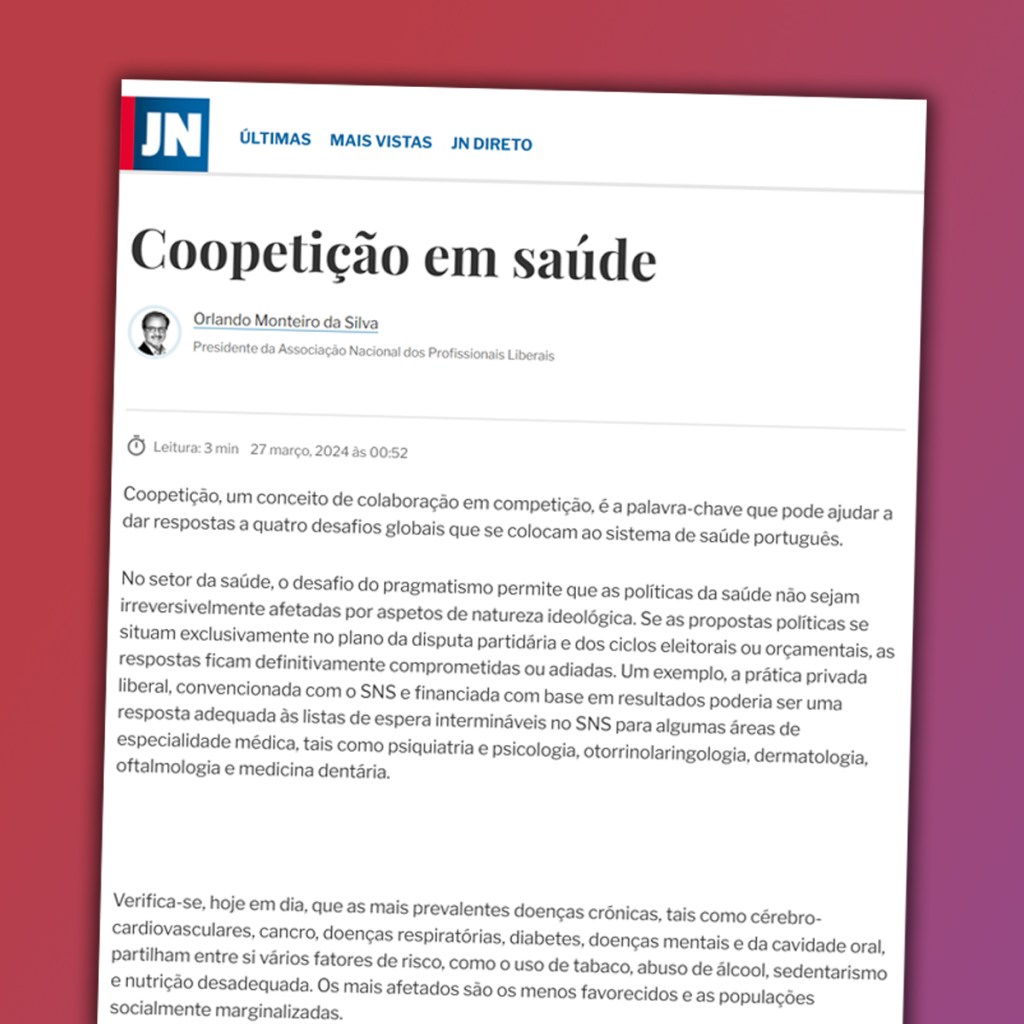
    Coopetição em saúde

    March 28, 2024

    Coopetição, um conceito de colaboração em competição, é a palavra-chave que pode ajudar a dar respostas a quatro desafios globais que se colocam ao sistema de saúde português.

    No setor da saúde, o desafio do pragmatismo permite que as políticas da saúde não sejam irreversivelmente afetadas por aspetos de natureza ideológica. Se as propostas políticas se situam exclusivamente no plano da disputa partidária e dos ciclos eleitorais ou orçamentais, as respostas ficam definitivamente comprometidas ou adiadas.

    Um exemplo, a prática privada liberal, convencionada com o SNS e financiada com base em resultados poderia ser uma resposta adequada às listas de espera intermináveis no SNS para algumas áreas de especialidade médica, tais como psiquiatria e psicologia, otorrinolaringologia, dermatologia, oftalmologia e medicina dentária.

    Verifica-se, hoje em dia, que as mais prevalentes doenças crónicas, tais como cérebro-cardiovasculares, cancro, doenças respiratórias, diabetes, doenças mentais e da cavidade oral, partilham entre si vários fatores de risco, como o uso de tabaco, abuso de álcool, sedentarismo e nutrição desadequada. Os mais afetados são os menos favorecidos e as populações socialmente marginalizadas.

    Estes fatores de risco implicam respostas a este desafio da transversalidade no sistema de saúde, composto pelo nosso SNS, privados e setor social.

    O desafio da responsabilização que enfrentam as sociedades europeias no acesso à saúde não é apenas de gestão e financiamento, mas também do foro cívico e educacional. É preciso desenvolver uma capacidade pedagógica na população, no sentido da cultura dos direitos e deveres de todos e de promoção de literacia e autocuidados em saúde.

    O desafio da sustentabilidade visa assegurar o direito de proteção na saúde para todos. Implica a alteração de vários paradigmas, tais como consciencializar a população que os cuidados de saúde não são gratuitos.

    Nos dias de hoje, a perceção desinformada da gratuitidade é perversa em termos de comportamento sociológico. Ainda que indiretamente, por via fiscal e pagamentos diretos, os serviços de saúde são pagos por todos nós ou pelo menos pela larga maioria dos cidadãos.

    Precisamos de mobilizar a inteligência coletiva no nosso sistema nacional de saúde e da sociedade no seu todo para implementar nesta próxima legislatura uma cultura organizacional e regulatória com mais colaboração no setor privado, mais competição dentro do setor público e mais coopetição entre público, privado e social.

    Artigo publicado originalmente a 27 de março de 2024 na edição impressa do Jornal de Notícias (pdf).

    Também disponível na edição online do Jornal de Notícias (site).


    Career management in dentistry

    March 22, 2024

    The key to a rewarding career lies in the harmony between who We Are and what We Do.

    Managing a career is a huge challenge, especially for those who are starting a highly qualified professional activity such as dentistry.

    There are many factors that influence a career path. Today I’m going to talk a little about the importance of self-knowledge in personal and professional development with some examples applicable to the various aspects of dentistry today.

    Most religions and spiritualities describe in their principles, formulations, and practices, although in very different ways, the centrality of self-knowledge in decision-making and in the choices that we are permanently making throughout life.

    Philosophy has also been doing so since ancient times.

    Socrates said, “Know thyself”.

    Lao Tzu wrote more comprehensively: “He who knows others is wise. He who knows himself is enlightened”.

    In other words, self-knowledge and the knowledge of others are intimately linked in a desirable balance and harmony.

    Subsequently, Psychology through various currents has emphasized over centuries until today the importance of our family, genetic, environmental context, our thoughts and our emotions in the Choices and Decisions that we make throughout life.

    In recent decades, a panoply of diversified proposals for all tastes, inside and outside the traditional branches of religions, spiritualities and science, has become common under the general concept of self-help.

    In fact, the paths of self-knowledge and the knowledge of others have no end, they are processes, permanent constructions and always unfinished.

    Our decisions and attitudes must arise, as far as possible, from the balance of these two aspects, that of the external approval that we all seek, from patients, from our colleagues, from family, from friendships, with the integration of a more interior, more personal aspect that, when harmonious, exalts us in the various existential planes.

    It is important, regarding the management of a career in dentistry, to emphasize that the awareness of some aspects of our personality must be, as far as possible, considered in the choices we make, proving to be fundamental for the type of path, of career we build.

    It is therefore important when we embrace a profession to know our strengths, our values, our goals, so that what we identify as essential in the professional path we aim for is not only determined by the interests and expectations of others, but also by those that each of us values.

    Understanding our strengths means that we should focus on paths that enhance them. It is much easier to evolve professionally from good to excellence than from mediocre to enough.

    The developments of the last 25 years have progressively transformed dentistry from a narrow-band profession to a broad-band one.

    Contributing to this is the recognition of the various skills and specializations that dentistry currently has, the technological possibilities in data science and digital and, above all, the growing and increasingly robust relational evidence of oral health with systemic health.

    These developments are in themselves generating enormous opportunities in the oral health profession, in addition to those in which the trinomial | dentist | turbine | chair | they were dominant.

    There is now room for the provision of generalist dental procedures, the most sought-after, as well as in the areas of clinical specialization, orthodontics, oral surgery, implantology, rehabilitation, endodontics, pediatric dentistry and non-clinical, such as management and public health.

    In addition, there are the differentiated skills that the dentist can acquire with growing demand from the public, such as harmonization and orofacial filling, temporomandibular dysfunction, acupuncture, sleep dentistry, ozone therapy, supportive dentistry in home continued care and dentistry in conflict contexts, among others.

    To make career decisions, the dentist can and should study himself and ask:

    Which profile is dominant in me?
    Will I be a Reformer or a Perfectionist?
    A more Altruistic , Caregiver?
    A Doer, Motivator, driven by results?
    An Individualist, more of an Artist?
    A more Theoretical Researcher?
    Someone who prioritizes the group, the organization, the security? An Enthusiastic, Optimistic
    who favors change and novelty?
    A Challenger, Protector, Punisher?
    Or a Pacifist, Conciliator?

    If we are good in a surgical area, if we are interested, for example, in implantology, why would we waste time and resources on a professional career in public services where such expertise is not applicable?

    Or, on the contrary, I would say if a young dentist has within him characteristics of an entrepreneur, of a doer, if he shows interest in concretizing, in achieving results, he should not value this aspect and, in addition to the clinical practice of the profession, improve his
    management skills, making an organization grow, making it more profitable, creating more value for himself, for teams and for society?

    Someone who recognizes himself as a perfectionist, who favors a more artistic, integrated, harmonized aspect, attentive to detail, often seeks the more aesthetic aspect of dentistry, dentistry, rehabilitation. Does it make sense for a perfectionist to be integrated into an
    environment where detail, detail, is devalued in terms of functionality at the lowest cost?

    Should the individualist, who chooses solo exercise, who has difficulty working in a group, who feels comfortable working directly with his patients, not valuing the organizational aspects that make the viability of a structure possible, privilege the path of team management in an organization?

    It is not intended to answer this type of question other than through the importance of each one of us analyzing ourselves from the point of view of their personality, their professional profile, the skills they have acquired, those they want to improve, the specialization they want to achieve in order to make compatible choices that can bring satisfaction to each professional path, Fulfillment and compatibility appropriate to the individual personality type and abilities.

    We cannot ask someone with a vocation for orthodontics to dedicate himself to endodontics…. They are very different choices.

    Regarding the longevity of careers in dentistry, there are few studies on the subject; But, in general, the high degree of demand in the oral health professions, in physical terms, in posture, in the degree of visual demand, auditory, mental demand, communicational and among others, makes them relatively short, compared to other careers in the medical fields.

    In addition, there are generally few opportunities for differentiation and progression outside the clinical field. As such, the construction and projection of a career should provide for parallel or complementary alternatives, whether around management, business, volunteering, civic intervention or others so that the dependence on exclusively clinical practice does not prove to generate frustration due to its relatively short life span and the lack of a previously planned alternative parallel career.

    In a world where differentiation and specialization become increasingly important, understanding oneself deeply makes it possible to identify specific niches within dentistry where one can not only survive, but actually thrive. Be it through surgery, management, dental aesthetics or any other of the numerous facets of this profession.

    Dentistry is diverse enough to respond to very different career visions adapted to very different personality profiles.

    You can read the full article, in Portuguese or English, in the Portuguese monthly edition of Dentistry magazine:

    Open the English version of the article (pdf).

    Open the Portuguese version of the article (pdf).