Oral Health Self-Care: For The Public (and Beyond)

June 27, 2024

Oral health has a very simple, very powerful and very effective message, with great scientific evidence: Brush your teeth at least twice a day, in the morning and before bed, with a fluoridated toothpaste and a soft-bristled brush.

Health professionals and society often lose sight of this simple message. We often forget the obvious in this regard… As is sometimes the case with other fundamental aspects of our lives.

We have a long way to go at global and local level in terms of its widespread adoption. Improving oral health indicators basically involves the community and individuals internalising this concept.

Taking care of our health, both physical and mental, is fundamental to living a full and happy life. However, we often neglect one crucial area of our overall well-being: oral health.
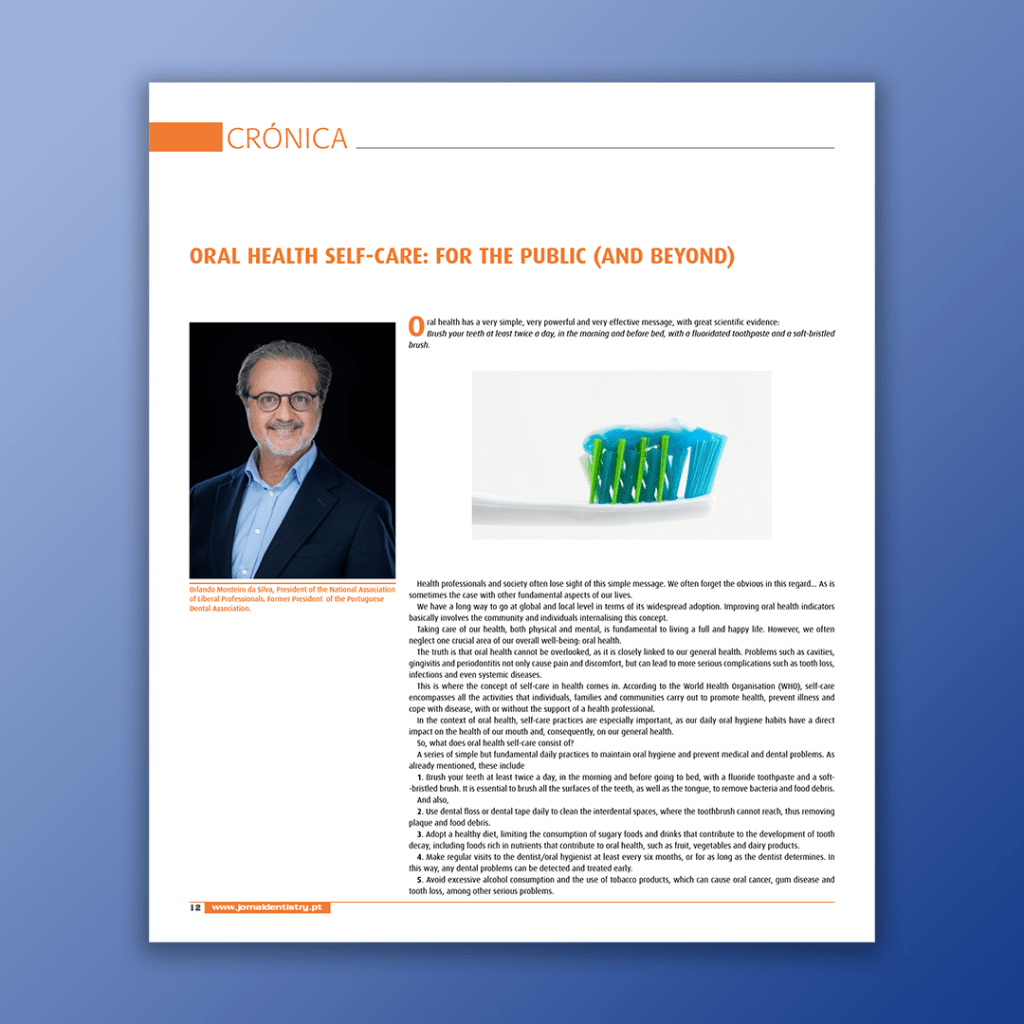
The truth is that oral health cannot be overlooked, as it is closely linked to our general health. Problems such as cavities, gingivitis and periodontitis not only cause pain and discomfort, but can lead to more serious complications such as tooth loss, infections and even systemic diseases.

This is where the concept of self-care in health comes in. According to the World Health Organisation (WHO), self-care encompasses all the activities that individuals, families and communities carry out to promote health, prevent illness and cope with disease, with or without the support of a health professional.

In the context of oral health, self-care practices are especially important, as our daily oral hygiene habits have a direct impact on the health of our mouth and, consequently, on our general health.

So, what does oral health self-care consist of?

A series of simple but fundamental daily practices to maintain oral hygiene and prevent medical and dental problems. As already mentioned, these include

  1. Brush your teeth at least twice a day, in the morning and before going to bed, with a fluoride toothpaste and a soft-bristled brush. It is essential to brush all the surfaces of the teeth, as well as the tongue, to remove bacteria and food debris.

And also,

  1. Use dental floss or dental tape daily to clean the interdental spaces, where the toothbrush cannot reach, thus removing plaque and food debris.
  2. Adopt a healthy diet, limiting the consumption of sugary foods and drinks that contribute to the development of tooth decay, including foods rich in nutrients that contribute to oral health, such as fruit, vegetables and dairy products.
  3. Make regular visits to the dentist/oral hygienist at least every six months, or for as long as the dentist determines. In this way, any dental problems can be detected and treated early.
  4. Avoid excessive alcohol consumption and the use of tobacco products, which can cause oral cancer, gum disease and tooth loss, among other serious problems.

And what are the benefits of oral health self-care?

In addition to preventing common dental problems such as tooth decay, gingivitis and halitosis (bad breath), oral health self-care has numerous benefits for our lives and for society in general.

  1. Significant economic savings
    By preventing dental problems through regular self-care, it is possible to avoid the high costs associated with treatments and rehabilitation procedures, such as fillings, root canal treatments , extractions and the placement of dental implants and other rehabilitation procedures.
  2. Increased productivity
    Good oral health can reduce the number of working or school days lost due to dental problems. Studies show that over-the-counter oral health products have resulted in approximately 40.8 billion productive days globally, equivalent to a welfare effect of 1.879 billion dollars.
  3. Improved quality of life
    Effective oral health self-care can lead to an estimated gain of 22 million quality-adjusted life years (QALYs) worldwide, reflecting better health status and reduced disability.

Several factors have contributed to the WHO’s emphasis on the importance of self-care in oral health:

  • Understanding individual behaviour
    Recognition of the crucial role of individual behaviour in disease prevention and management has grown, supported by the World Health Organization’s (WHO) focus on healthy behaviours and patient empowerment.
  • Person-centred care
    The emphasis on health literacy and empowerment is essential to enable individuals to take care of their oral health in an autonomous and informed way.
  • Digital tools
    The proliferation of digital tools, such as mobile applications and online resources, has expanded access to oral health information and services. However, improvements are needed to ensure equity in access to digital health, particularly in poorer communities.

To maximize the benefits of oral health self-care, it is essential to create an enabling environment, based on four main approaches:

  1. Support and adoption from all stakeholders
    Broad support from patients, consumers, healthcare professionals, regulators and policymakers is essential to maximise the adoption and value of oral health self-care products and behaviours.
  2. Empowering consumers and patients
    Empowering consumers and patients to understand their oral health, make informed decisions and use certified self-care products with confidence is crucial to the success of this approach.
  3. Self-care health policy
    Policymakers’ recognition of the economic value of products used in oral health self-care practices can foster policies that promote self-care as an affordable and sustainable health solution.
  4. Regulatory frameworks
    Effective regulations are needed to drive innovation, empower consumers and extract maximum value from self-care products for health systems.

    Self-care is critical for healthy ageing, aligning with WHO resolutions on aging and health, primary health care and oral health.

    In addition, self-care contributes directly to several of the United Nations’ Sustainable Development Goals (SDGs), including:
    Goal 3: Ensure healthy lives and promote well-being for
    all at all ages.
    Goal 1: Eradicate poverty in all its forms everywhere.
    Goal 10: Reduce inequality within and between countries

    A comprehensive international focus on self-care, along the lines of the WHO recommendations, could foster the momentum needed to fully integrate self-care into health systems for the benefit of individuals and society.

    Therefore, to get the most out of oral health self-care, it is essential to develop an effective policy framework that includes the following elements:

    • Clear definition of self-care and its value for national health systems, governments and person-centred approaches.
    • Encouraging member states to develop and implement national self-care strategies, guidelines or plans that address key enablers.
    • Guidance to member states on aligning resources, investments and policies to support a harmonised national self-care strategy.

    Therefore, to effectively integrate self-care into their health systems, Member States must:

    • Improve public health literacy and education by implementing awareness campaigns on self-care interventions for health and well-being.
    • Integrate and expand digital health tools for self-care in national health and social care systems.
    • Develop the capacity of health and social care professionals in relation to self-care by incorporating self-care practices into training modules and national guidelines.
    • Recognise self-care as a critical and transversal component of the care continuum and a facilitator of Universal Health Coverage.
    • Invest in policies that promote self-care practices as a means of reducing health expenditure and addressing gaps in the workforce.

    Conclusion:

    Oral health self-care represents a valuable opportunity to improve the sustainability of health systems, health outcomes and the quality of life of individuals.

    By adopting a comprehensive policy framework and promoting self-care practices, health systems can become more efficient and resilient, ultimately contributing to chieving the goal of Universal Health Coverage.

    Self-care empowers individuals, relieves pressure on healthcare providers and generates significant economic savings. Embracing self-care as a core component of healthcare delivery will require coordinated efforts from policymakers, healthcare professionals and civil society at large.

    By fostering an environment conducive to self-care, we can build healthier communities and sustainable health systems for the future.

    The dentist has a key role to play in this approach. We must never lose sight of this.

    You can read the full article, in Portuguese or English, in the Portuguese monthly edition of Dentistry magazine:

    Open the English version of the article (pdf).

    Open the Portuguese version of the article (pdf).


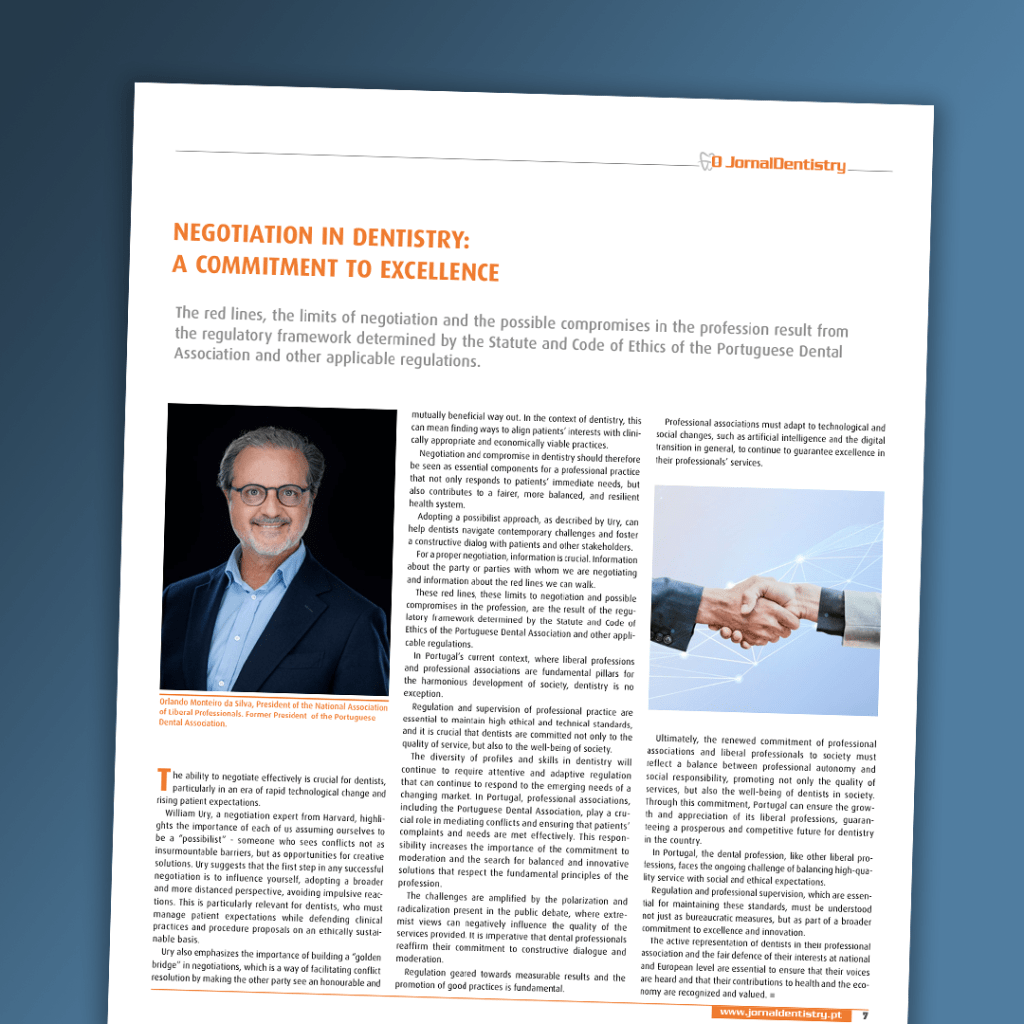
    Negotiation in dentistry: a commitment to excellence

    May 27, 2024

    The red lines, the limits of negotiation and the possible compromises in the profession result from the regulatory framework determined by the Statute and Code of Ethics of the Portuguese Dental Association and other applicable regulations.

    The ability to negotiate effectively is crucial for dentists, particularly in an era of rapid technological change and rising patient expectations.

    William Ury, a negotiation expert from Harvard, highlights the importance of each of us assuming ourselves to be a “possibilist” – someone who sees conflicts not as insurmountable barriers, but as opportunities for creative solutions.

    Ury suggests that the first step in any successful negotiation is to influence yourself, adopting a broader and more distanced perspective, avoiding impulsive reactions. This is particularly relevant for dentists, who must manage patient expectations while defending clinical practices and procedure proposals on an ethically sustainable basis.

    Ury also emphasizes the importance of building a “golden bridge” in negotiations, which is a way of facilitating conflict resolution by making the other party see an honourable and mutually beneficial way out. In the context of dentistry, this can mean finding ways to align patients’ interests with clinically appropriate and economically viable practices.

    Negotiation and compromise in dentistry should therefore be seen as essential components for a professional practice that not only responds to patients’ immediate needs, but also contributes to a fairer, more balanced, and resilient health system.

    Adopting a possibilist approach, as described by Ury, can help dentists navigate contemporary challenges and foster a constructive dialog with patients and other stakeholders.

    For a proper negotiation, information is crucial. Information about the party or parties with whom we are negotiating and information about the red lines we can walk.

    These red lines, these limits to negotiation and possible compromises in the profession, are the result of the regulatory framework determined by the Statute and Code of Ethics of the Portuguese Dental Association and other applicable regulations.

    In Portugal’s current context, where liberal professions and professional associations are fundamental pillars for the harmonious development of society, dentistry is no exception.

    Regulation and supervision of professional practice are essential to maintain high ethical and technical standards, and it is crucial that dentists are committed not only to the quality of service, but also to the well-being of society.

    The diversity of profiles and skills in dentistry will continue to require attentive and adaptive regulation that can continue to respond to the emerging needs of a changing market. In Portugal, professional associations, including the Portuguese Dental Association, play a crucial role in mediating conflicts and ensuring that patients’ complaints and needs are met effectively. This responsibility increases the importance of the commitment to moderation and the search for balanced and innovative solutions that respect the fundamental principles of the profession.

    The challenges are amplified by the polarization and radicalization present in the public debate, where extremist views can negatively influence the quality of the
    services provided. It is imperative that dental professionals reaffirm their commitment to constructive dialogue and moderation.

    Regulation geared towards measurable results and the promotion of good practices is fundamental.

    Professional associations must adapt to technological and social changes, such as artificial intelligence and the digital transition in general, to continue to guarantee excellence in their professionals’ services.

    Ultimately, the renewed commitment of professional associations and liberal professionals to society must reflect a balance between professional autonomy and social responsibility, promoting not only the quality of services, but also the well-being of dentists in society.

    Through this commitment, Portugal can ensure the growth and appreciation of its liberal professions, guaranteeing a prosperous and competitive future for dentistry in the country.

    In Portugal, the dental profession, like other liberal professions, faces the ongoing challenge of balancing high-quality service with social and ethical expectations.

    Regulation and professional supervision, which are essential for maintaining these standards, must be understood not just as bureaucratic measures, but as part of a broader commitment to excellence and innovation.

    The active representation of dentists in their professional association and the fair defence of their interests at national and European level are essential to ensure that their voices are heard and that their contributions to health and the economy are recognized and valued.

    You can read the full article, in Portuguese or English, in the Portuguese monthly edition of Dentistry magazine:

    Open the English version of the article (pdf).

    Open the Portuguese version of the article (pdf).


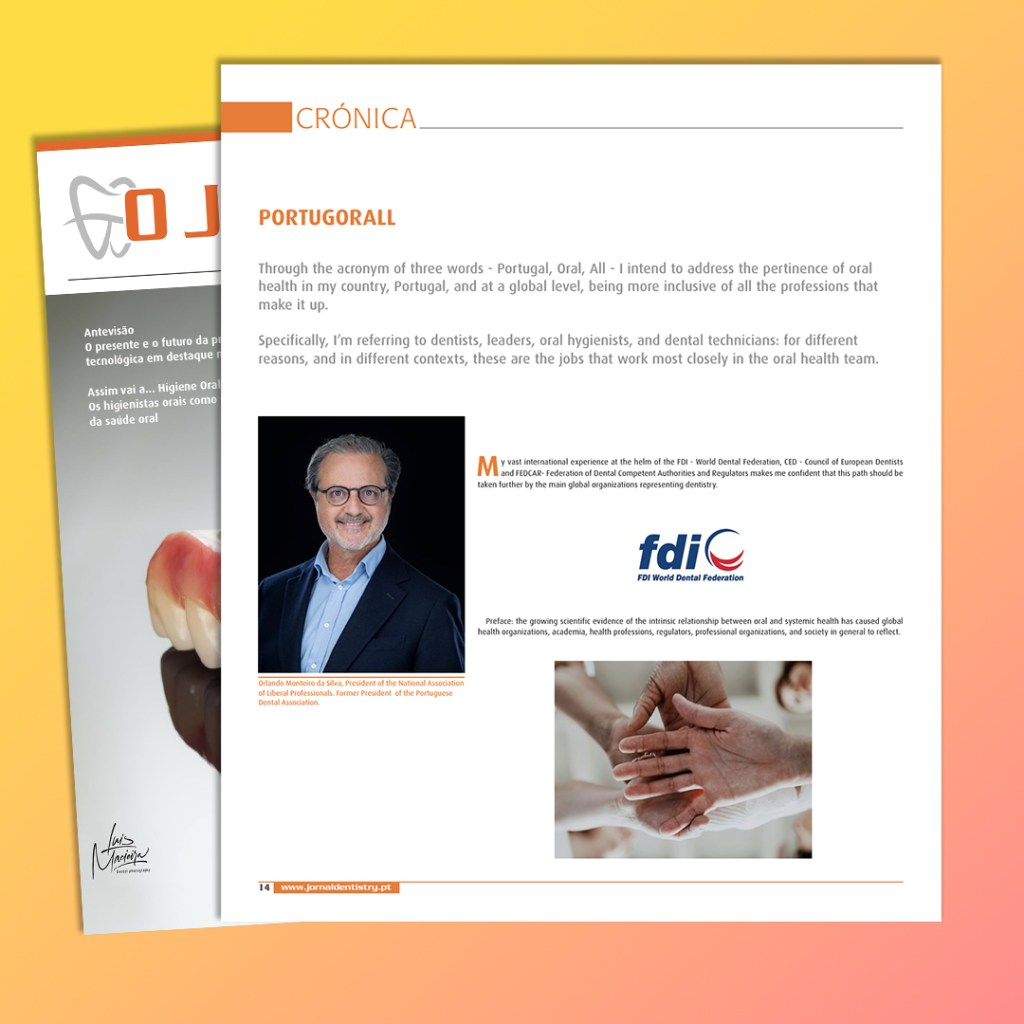
    Portugorall – Portugal, Oral, All

    May 4, 2024

    Through the acronym of three words – Portugal, Oral, All – I intend to address the pertinence of oral health in my country, Portugal, and at a global level, being more inclusive of all the professions that make it up.

    Specifically, I’m referring to dentists, leaders, oral hygienists, and dental technicians: for different reasons, and in different contexts, these are the jobs that work most closely in the oral health team.

    My vast international experience at the helm of the FDI – World Dental Federation, CED – Council of European Dentists and FEDCAR- Federation of Dental Competent Authorities and Regulators makes me confident that this path should be taken further by the main global organizations representing dentistry.

    Preface: the growing scientific evidence of the intrinsic relationship between oral and systemic health has caused global health organizations, academia, health professions, regulators, professional organizations, and society in general to reflect.

    Patients and their organizations, as well as insurers and public and private funding systems, have taken this integrated approach to oral health into account. Nothing could be more right and proper.

    Involving family doctors in the context of the desirable inclusion of oral health in primary health care, in a universal coverage approach, with their collaboration:

    • nutritionists, given the widespread sharing and relationship between nutrition and oral health,
    • psychologists, now that everyone is aware of the impact and relationship of oral health on mental health and vice versa. In the latter case, it would be enough to take into account the impact of addictions to various substances on oral health;
    • also in terms of temporomandibular joint pathology, TMJ, bruxism and occlusal problems and their relationship with physiotherapy, sleep medicine and neurology.

    And other collaborations could be identified with nurses, pediatricians, speech therapists, etc. examples of this relationship between oral and systemic health in various areas of health.

    But with so much looking around, we’re perhaps forgetting to look inwards, at the oral health team with whom we work every day.

    Note that the “Global Report on the State of Oral Health: Towards Universal Health Coverage for Oral Health by 2030” presents a comprehensive overview of the challenges and opportunities in the field of oral health globally.

    The World Health Organization (WHO) highlights that oral diseases are among the most common non-communicable diseases, affecting approximately 3.5 billion people worldwide.

    These diseases are, as an obvious result, dental caries, and periodontal disease, which are largely preventable through educational, preventive, and clinical interventions, along with approaches to combat risks common to all chronic diseases.

    The report points to the need to include oral health services in publicly funded national health coverage services, accessible free of charge or at a cost that people can afford.

    In addition, it describes the main determinants and risk factors of oral diseases, including sugar consumption, tobacco use and excessive alcohol consumption.

    This approach highlights the fact that chronic diseases and some pathologies of the oral cavity share a set of risk factors that can be conditioned or altered.

    Oral hygienists, who are true experts in prevention, play an essential role in the prophylactic and educational approach and in oral health literacy.

    On the other hand, in the rehabilitation of edentulism and tooth loss, the device developed by Dental Prosthesis Technicians (DPT) is crucial.

    As such, while not being exhaustive, because these senior health technicians, OH and DPT, are broader in their professional scope than described collaboration and dialog between dentistry and these oral health jobs is fundamental.

    It would be highly advisable to establish permanent contact platforms between these different professional profiles, for the sake of patients and users.

    True alliances for oral health.

    In conclusion:

    Yes, it is essential to look at interprofessional collaboration with other areas of health. It certainly is. But we can’t leave behind dialog and interaction with those who work with us every day to prevent, treat and rehabilitate diseases of the oral cavity.

    The major international and national organizations that represent and regulate oral health must include the medicine of oral hygienists and dental technicians with dental medicine.

    In the name of excellent interdisciplinary oral health: PortugOralL.

    You can read the full article, in Portuguese or English, in the Portuguese monthly edition of Dentistry magazine:

    Open the English version of the article (pdf).

    Open the Portuguese version of the article (pdf).


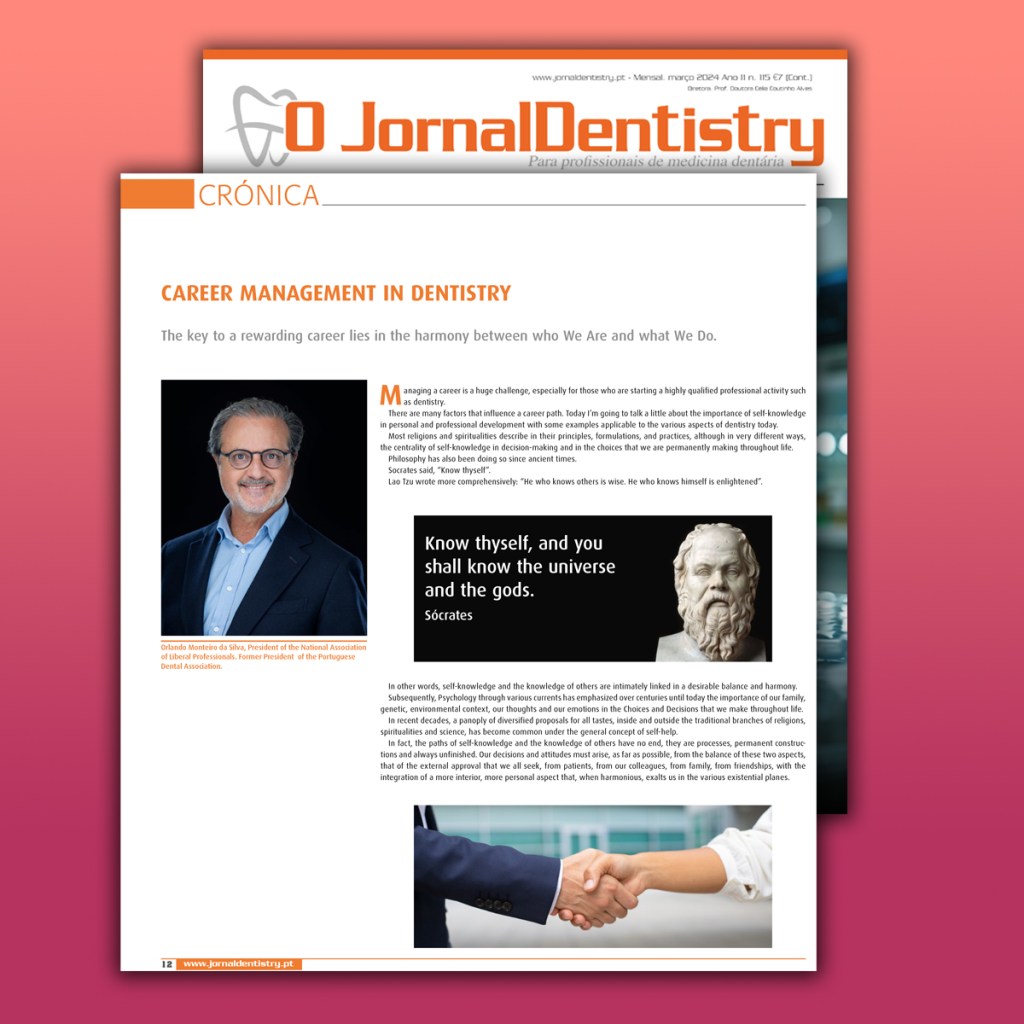
    Career management in dentistry

    March 22, 2024

    The key to a rewarding career lies in the harmony between who We Are and what We Do.

    Managing a career is a huge challenge, especially for those who are starting a highly qualified professional activity such as dentistry.

    There are many factors that influence a career path. Today I’m going to talk a little about the importance of self-knowledge in personal and professional development with some examples applicable to the various aspects of dentistry today.

    Most religions and spiritualities describe in their principles, formulations, and practices, although in very different ways, the centrality of self-knowledge in decision-making and in the choices that we are permanently making throughout life.

    Philosophy has also been doing so since ancient times.

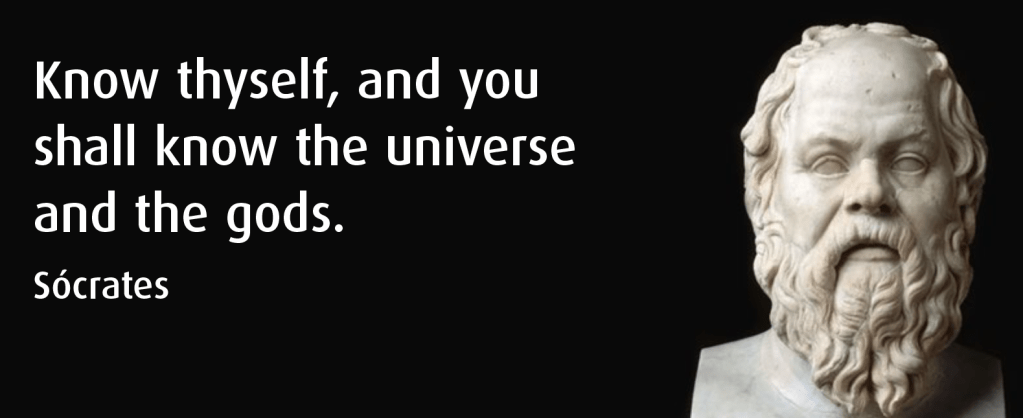
    Socrates said, “Know thyself”.

    Lao Tzu wrote more comprehensively: “He who knows others is wise. He who knows himself is enlightened”.

    In other words, self-knowledge and the knowledge of others are intimately linked in a desirable balance and harmony.

    Subsequently, Psychology through various currents has emphasized over centuries until today the importance of our family, genetic, environmental context, our thoughts and our emotions in the Choices and Decisions that we make throughout life.

    In recent decades, a panoply of diversified proposals for all tastes, inside and outside the traditional branches of religions, spiritualities and science, has become common under the general concept of self-help.

    In fact, the paths of self-knowledge and the knowledge of others have no end, they are processes, permanent constructions and always unfinished.

    Our decisions and attitudes must arise, as far as possible, from the balance of these two aspects, that of the external approval that we all seek, from patients, from our colleagues, from family, from friendships, with the integration of a more interior, more personal aspect that, when harmonious, exalts us in the various existential planes.

    It is important, regarding the management of a career in dentistry, to emphasize that the awareness of some aspects of our personality must be, as far as possible, considered in the choices we make, proving to be fundamental for the type of path, of career we build.

    It is therefore important when we embrace a profession to know our strengths, our values, our goals, so that what we identify as essential in the professional path we aim for is not only determined by the interests and expectations of others, but also by those that each of us values.

    Understanding our strengths means that we should focus on paths that enhance them. It is much easier to evolve professionally from good to excellence than from mediocre to enough.

    The developments of the last 25 years have progressively transformed dentistry from a narrow-band profession to a broad-band one.

    Contributing to this is the recognition of the various skills and specializations that dentistry currently has, the technological possibilities in data science and digital and, above all, the growing and increasingly robust relational evidence of oral health with systemic health.

    These developments are in themselves generating enormous opportunities in the oral health profession, in addition to those in which the trinomial | dentist | turbine | chair | they were dominant.

    There is now room for the provision of generalist dental procedures, the most sought-after, as well as in the areas of clinical specialization, orthodontics, oral surgery, implantology, rehabilitation, endodontics, pediatric dentistry and non-clinical, such as management and public health.

    In addition, there are the differentiated skills that the dentist can acquire with growing demand from the public, such as harmonization and orofacial filling, temporomandibular dysfunction, acupuncture, sleep dentistry, ozone therapy, supportive dentistry in home continued care and dentistry in conflict contexts, among others.

    To make career decisions, the dentist can and should study himself and ask:

    Which profile is dominant in me?
    Will I be a Reformer or a Perfectionist?
    A more Altruistic , Caregiver?
    A Doer, Motivator, driven by results?
    An Individualist, more of an Artist?
    A more Theoretical Researcher?
    Someone who prioritizes the group, the organization, the security? An Enthusiastic, Optimistic
    who favors change and novelty?
    A Challenger, Protector, Punisher?
    Or a Pacifist, Conciliator?

    If we are good in a surgical area, if we are interested, for example, in implantology, why would we waste time and resources on a professional career in public services where such expertise is not applicable?

    Or, on the contrary, I would say if a young dentist has within him characteristics of an entrepreneur, of a doer, if he shows interest in concretizing, in achieving results, he should not value this aspect and, in addition to the clinical practice of the profession, improve his
    management skills, making an organization grow, making it more profitable, creating more value for himself, for teams and for society?

    Someone who recognizes himself as a perfectionist, who favors a more artistic, integrated, harmonized aspect, attentive to detail, often seeks the more aesthetic aspect of dentistry, dentistry, rehabilitation. Does it make sense for a perfectionist to be integrated into an
    environment where detail, detail, is devalued in terms of functionality at the lowest cost?

    Should the individualist, who chooses solo exercise, who has difficulty working in a group, who feels comfortable working directly with his patients, not valuing the organizational aspects that make the viability of a structure possible, privilege the path of team management in an organization?

    It is not intended to answer this type of question other than through the importance of each one of us analyzing ourselves from the point of view of their personality, their professional profile, the skills they have acquired, those they want to improve, the specialization they want to achieve in order to make compatible choices that can bring satisfaction to each professional path, Fulfillment and compatibility appropriate to the individual personality type and abilities.

    We cannot ask someone with a vocation for orthodontics to dedicate himself to endodontics…. They are very different choices.

    Regarding the longevity of careers in dentistry, there are few studies on the subject; But, in general, the high degree of demand in the oral health professions, in physical terms, in posture, in the degree of visual demand, auditory, mental demand, communicational and among others, makes them relatively short, compared to other careers in the medical fields.

    In addition, there are generally few opportunities for differentiation and progression outside the clinical field. As such, the construction and projection of a career should provide for parallel or complementary alternatives, whether around management, business, volunteering, civic intervention or others so that the dependence on exclusively clinical practice does not prove to generate frustration due to its relatively short life span and the lack of a previously planned alternative parallel career.

    In a world where differentiation and specialization become increasingly important, understanding oneself deeply makes it possible to identify specific niches within dentistry where one can not only survive, but actually thrive. Be it through surgery, management, dental aesthetics or any other of the numerous facets of this profession.

    Dentistry is diverse enough to respond to very different career visions adapted to very different personality profiles.

    You can read the full article, in Portuguese or English, in the Portuguese monthly edition of Dentistry magazine:

    Open the English version of the article (pdf).

    Open the Portuguese version of the article (pdf).


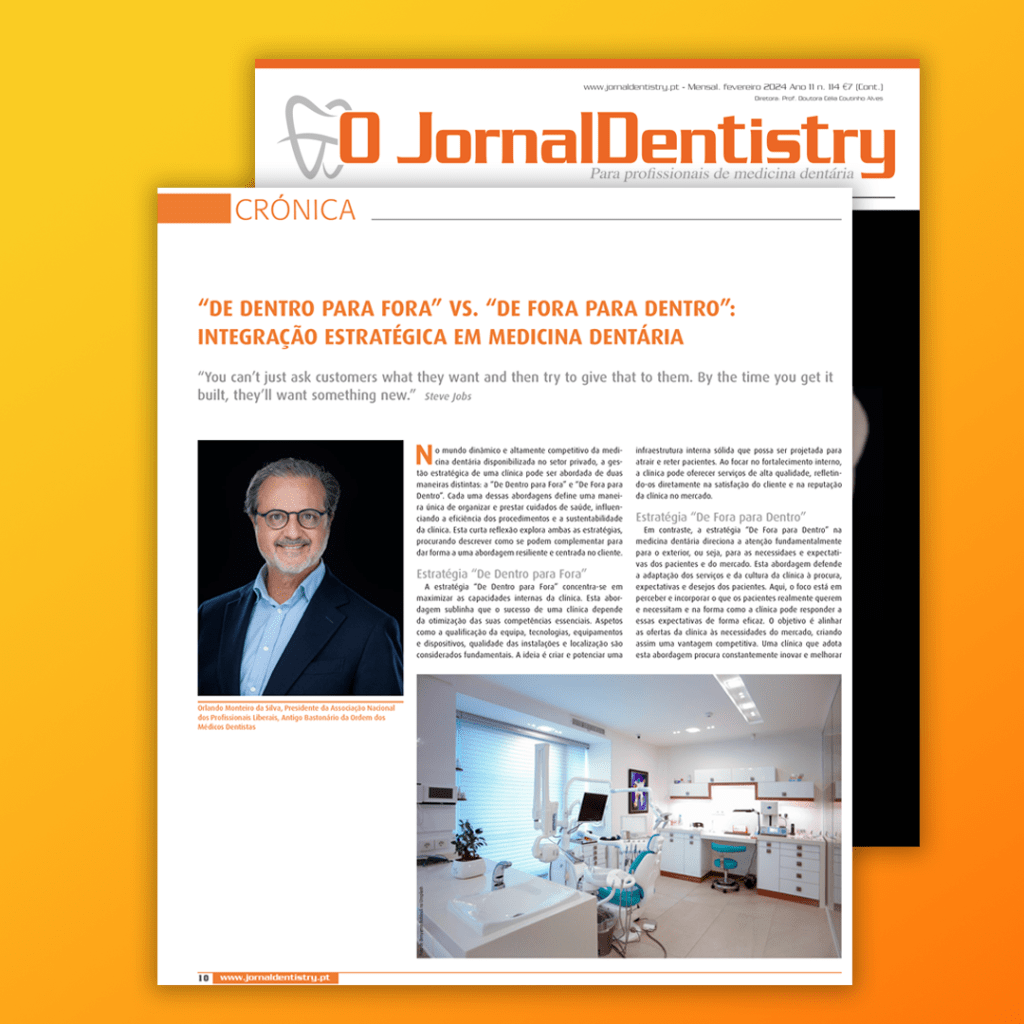
    From the inside out vs. from the outside in: strategic integration in dentistry

    February 23, 2024

    In the dynamic and highly competitive world of dentistry available in the private sector, the strategic management of a clinic can be approached in two different ways: “From the Inside Out” and “From the Outside In”.

    Each of these approaches defines a unique way of organizing and delivering healthcare, influencing the efficiency of procedures and the sustainability of the clinic. This short reflection explores
    both strategies, seeking to describe how they can complement each other to shape a resilient and customer-centric approach

    Inside-Out Strategy

    The Inside Out strategy focuses on maximizing the clinic’s internal capabilities. This approach underlines that the success of a clinic depends on optimizing its core competencies.

    Aspects such as the qualification of the team, technologies, equipment and devices, quality of facilities and location are considered fundamental.

    The idea is to create and leverage a solid internal infrastructure that can be designed to attract and retain patients. By focusing on internal strengthening, the clinic can offer high-quality services, reflecting them directly on customer satisfaction and the clinic’s reputation in the market.

    Outside-in Strategy

    In contrast, the Outside-In strategy in dentistry directs attention fundamentally outwards, i.e., to the needs and expectations of patients and the market.

    This approach advocates adapting the clinic’s services and culture to patients’ demands, expectations, and desires. Here, the focus is on understanding and embodying what patients really want and need and how the clinic can respond to those expectations effectively.

    The goal is to align the clinic’s offerings with the needs of the market, thereby creating a competitive advantage. A clinic that adopts this approach is constantly looking to innovate and improve its services, relying mainly on feedback and evolving patient preferences.

    You can read the full article, in Portuguese or English, in the Portuguese monthly edition of Dentistry magazine:

    Open the English version of the article (pdf).

    Open the Portuguese version of the article (pdf).


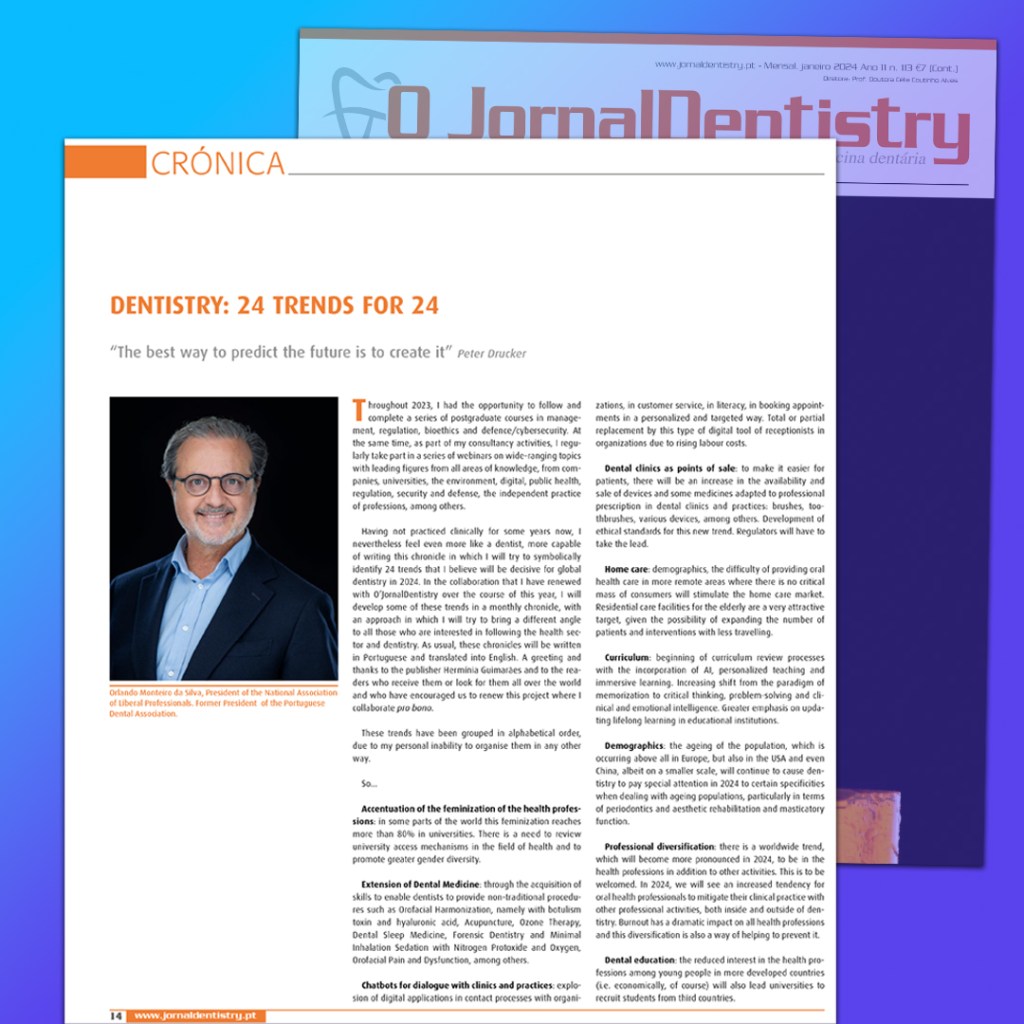
    Dentistry: 24 trends for 24

    January 25, 2024

    Throughout 2023, I had the opportunity to follow and complete a series of postgraduate courses in management, regulation, bioethics and defence/cybersecurity.

    At the same time, as part of my consultancy activities, I regularly take part in a series of webinars on wide-ranging topics with leading figures from all areas of knowledge, from companies, universities, the environment, digital, public health, regulation, security and defense, the independent practice of professions, among others.

    Having not practiced clinically for some years now, I nevertheless feel even more like a dentist, more capable of writing this chronicle in which I will try to symbolically identify 24 trends that I believe will be decisive for global dentistry in 2024.

    In the collaboration that I have renewed with O’JornalDentistry over the course of this year, I will develop some of these trends in a monthly chronicle, with an approach in which I will try to bring a different angle to all those who are interested in following the health sector and dentistry.

    As usual, these chronicles will be written in Portuguese and translated into English. A greeting and thanks to the publisher Hermínia Guimarães and to the readers who receive them or look for them all over the world and who have encouraged us to renew this project where I collaborate pro bono.

    These trends have been grouped in alphabetical order, due to my personal inability to organise them in any other way.

    You can read the full article, in Portuguese or English, in the Portuguese monthly edition of Dentistry magazine:

    Open the English version of the article (pdf).

    Open the Portuguese version of the article (pdf).


    Business and pleasure in dentistry

    December 18, 2023

    The Portuguese words “Ócio” and “Negócio” have common roots.

    The word “Ócio” comes from the Latin “otium”, which refers to free time, leisure, rest. Over time, this idea of free time evolved into the modern concept of leisure.

    The word “negócio” comes from the term “negotium”, which is a combination of “nec” (not) and “otium” (leisure). So, originally, “negotium” meant something other than lei- sure, i.e. an occupation, activity or enterprise.

    We’re not going to go into detail today about the importance of leisure, and in particular Being, to the detriment of Doing, particularly in today’s societies: for some reason we’re Human Beings and not Human Doings…

    What I wanted to emphasize is the importance of valuing the concept of Business, because it has a very respectable origin.

    We often hear people say that dentistry is not a business.

    It seems to me that, in fact, what they’re trying to convey is that it’s not a business like any other.

    In Portugal, for example, the law states that the performance of a dental medical act corresponds to a pecuniary consideration from the recipient of the services, without prejudice to the legislation applicable to voluntary work and social action. This recognises the obvious, which is that dentistry is not only a health activity but also an economic activity.

    So what is the business in dentistry?

    You can read the full article, in Portuguese or English, in the Portuguese monthly edition of Dentistry magazine:

    Open the English version of the article (pdf).

    Open the Portuguese version of the article (pdf).


    Need and Desire in Dentistry

    November 19, 2023

    Dentistry, like other medical fields, lives in a limbo, in a conflict between its curative and aesthetic aspects.

    Between the need to prevent, treat and rehabilitate functions and the desire to look better, to correct, to alter, to whiten, to align the teeth, jaws and attached structures for aesthetic reasons.

    This conflict is resolved naturally with a holistic approach to these two inseparable aspects.

    Aesthetics and function must fundamentally and for the dentist be integrable.

    Clients, that is, all those who in their essence will be able to choose to whom they entrust the improvement or resolution of their perceived needs, more connected to function and felt desires, more connected with aesthetics, tend to separate both aspects.

    You can read the full article, in Portuguese or English, in the Portuguese monthly edition of Dentistry magazine:

    Open the English version of the article (pdf).

    Open the Portuguese version of the article (pdf).


    The Bird Houses

    October 21, 2023

    Paulo Romão, recognized as one of the best Portuguese designers, boasts a resume and portfolio that speak for themselves.

    He is the creative mind behind the logo and image of the Portuguese Association of Liberal Professionals.

    He’s taken on a new project that I find extremely interesting and wanted to share with my friends and contacts around the world: The Bird Houses.

    All Bird Houses are handmade and unique pieces built to order, taking the best out of the natural beauty of the materials. These are made from different types of wood, Burel (traditional portuguese wool textile), steel and high temperature glazed ceramic.

    The unique combination of carefully chosen materials is what makes it an exclusive piece of design. There aren’t two pieces of wood the same. Therefore, there will never be two identical Bird Houses.

    I invite you to check out this unique artistic concept on The Bird Houses.


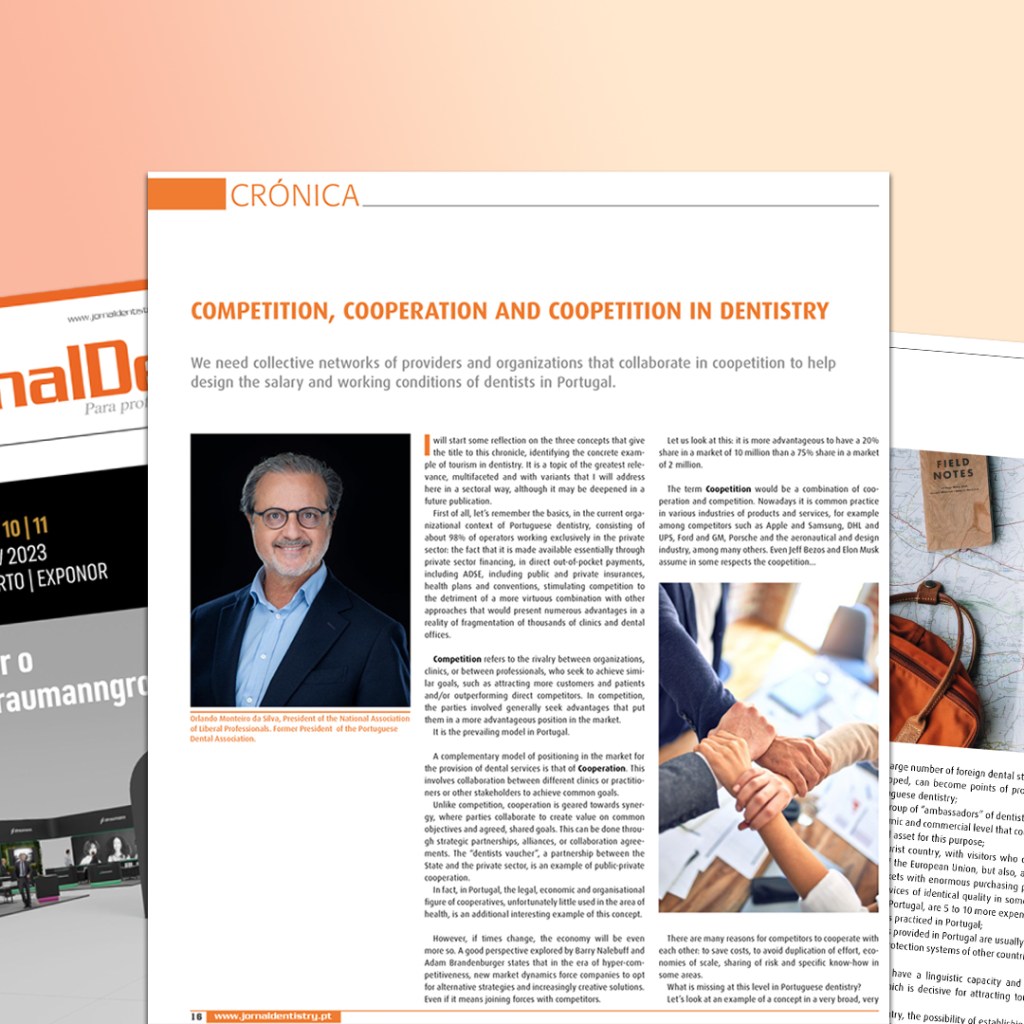
    Competition, cooperation and coopetition in dentistry

    October 20, 2023

    We need collective networks of providers and organizations that collaborate in coopetition to help design the salary and working conditions of dentists in Portugal.

    I will start some reflection on the three concepts that give the title to this chronicle, identifying the concrete example of tourism in dentistry. It is a topic of the greatest relevance, multifaceted and with variants that I will address here in a sectoral way, although it may be deepened in a future publication.

    First of all, let’s remember the basics, in the current organizational context of Portuguese dentistry, consisting of about 98% of operators working exclusively in the private sector: the fact that it is made available essentially through private sector financing, in direct out-of-pocket payments, including ADSE, including public and private insurances, health plans and conventions, stimulating competition to the detriment of a more virtuous combination with other approaches that would present numerous advantages in a reality of fragmentation of thousands of clinics and dental offices.

    You can read the full article, in Portuguese or English, in the Portuguese monthly edition of Dentistry magazine:

    Open the English version of the article (pdf).

    Open the Portuguese version of the article (pdf).