Dentistry is a profession that requires a unique combination of scientific, technical knowledge and surgical precision. Daily, the dentist deals with a set of challenges that involve both the execution of meticulous procedures and the management of anxious patients, often in an environment full of great pressure and responsibilities. In addition, it is common for this professional to have to reconcile administrative tasks that make professional practice even more exhausting.
In this context, mindfulness emerges as a powerful tool that can help dentists manage stress, improve their clinical performance and develop a more empathetic relationship with their patients, thus preventing burnout. This article explores the importance of mindfulness in clinical practice, highlighting how it can be integrated into the dentist’s routine and the benefits it provides for the well-being of the professional and the quality of care provided to patients.
What is Mindfulness?
The concept of mindfulness, popularized by professor of medicine Jon Kabat-Zinn, is defined as “the awareness that arises from paying attention, intentionally, to the present moment and without judgment.” In practice, it’s about developing the ability to stay focused on the present, rather than letting the mind wander between worries about the future or past events. Mindfulness is a simple but extremely effective tool that can be practiced at any time of the day, from short breathing exercises to deeper mindfulness in routine activities.
The Challenges of Dentistry
The clinical practice of the dentist is naturally full of challenges. Among the main ones we can highlight:
Management of anxious patients: Many patients feel fear or discomfort in relation to dental procedures, which increases the level of stress, both for the patient and the professional. Mindfulness can help the dentist to deal with these situations with calmer and empathy.
Precise technical procedures: The demand for precision in dentistry is extreme. Any small mistake can compromise the treatment and shake the patient’s confidence. Maintaining focus and concentration is therefore key.
Intense workload: Many dentists face long working hours, which contributes to physical and mental exhaustion, affecting performance.
Administrative requirements: In addition to clinical procedures, running a clinic involves a significant amount of financial, regulatory, and personnel administration issues, which can add an extra load of stress.

Benefits of Mindfulness for the Dentist
- Stress and Anxiety Reduction
Studies indicate that regular mindfulness practice is effective in reducing stress and anxiety. For the dentist, who often works under pressure, this practice offers a way to slow down, reflect, and react more calmly and clearly. With mindfulness, it is possible to create a “mental space” that allows for a less impulsive and more thoughtful response to challenging situations.
- Improved Focus and Concentration
The ability to stay focused during technical procedures is essential in dentistry. Mindfulness has been linked to strengthening the prefrontal cortex, the area of the brain responsible for attention and concentration. Dentists who practice mindfulness tend to develop a greater ability to stay focused for prolonged periods, which translates into fewer clinical serrors and better treatment outcomes.
- Emotional Regulation
In addition to helping with stress management, mindfulness also contributes to more effective emotional regulation.
In situations of tension with patients or when procedures do not go as expected, the dentist who practices mindfulness is better able to pause before reacting, resulting in more controlled and empathetic responses.
- Development of Empathy
Mindfulness promotes active listening and empathy, essential soft skills for the relationship between the dentist and the patient. Being “present” during consultations allows the professional to better understand the concerns and anxieties of their patients, creating a relationship of trust that facilitates treatment.

Mindfulness in Clinical Practice
Improved Patient Care
Mindfulness not only improves the well-being of the dentist, but also positively affects the patient experience. A calmer, more focused, and empathetic dentist conveys security to his patients, especially the most anxious, promoting a more collaborative service and a more positive experience.
Reduction of Errors in Procedures
Complex clinical procedures require maximum concentration. Mindfulness helps the dentist to stay focused throughout the procedure, reducing the risk of errors and improving results.
Improvement in Time Management
The practice of mindfulness can also help in efficient time management, a crucial skill in the dental clinic. By prioritizing what really matters and avoiding unnecessary distractions — such as excessive use of technology or multitasking — the dentist can better organize his activities, optimizing time for procedures and administrative tasks.
Mindfulness in Clinic Management
In addition to benefiting clinical practice, mindfulness is also useful in the management of the dental clinic. The decision-making process, often carried out under pressure, becomes clearer and more thoughtful with the practice of mindfulness. The creation of a mental space allows the dentist to analyse situations calmly, leading to more strategic and well-founded decisions, from personnel management to financial issues.
Mindfulness = Burnout Prevention
Burnout is a common problem among healthcare professionals, and dentists are no exception. The combination of long working hours with clinical and administrative responsibilities can lead to physical and emotional burnout. Regular mindfulness practice helps prevent burnout by promoting
emotional self-regulation and the ability to cope with stress in a healthy way.
How to Incorporate Mindfulness into the Dentist’s Routine
Incorporating mindfulness into everyday life doesn’t require major changes. Simple techniques can be practiced throughout the day, providing considerable benefits:
Mindful breathing: Taking a few minutes before a procedure or during breaks to focus on breathing can help reduce stress and increase focus.
Conscious transitions: Use moments of transition, such as walks between rooms, or breaks to refocus the mind and be more present at the next task.
Limit technology use: Establishing specific times to check email and turn off notifications during procedures can reduce distractions and help stay focused.

Conclusion
Mindfulness offers the dentist a valuable set of tools to deal with the daily challenges of their profession. In addition to promoting emotional well-being and improving focus, mindfulness contributes to more efficient clinical practice, increasing the quality of care offered to patients and preventing burnout.
Incorporating mindfulness into the dentist’s daily routine is an investment in mental health and excellence in clinical practice, resulting in a more balanced and satisfying professional activity.
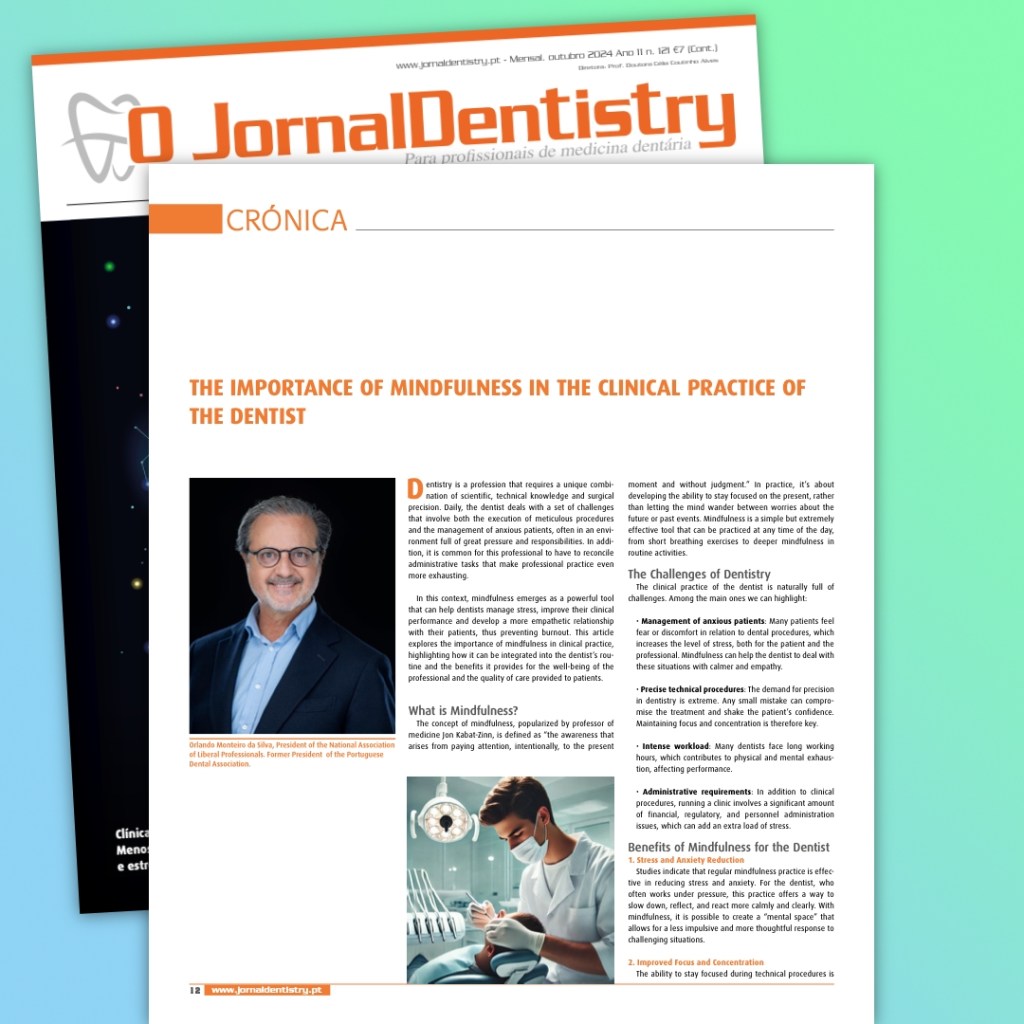
You can read the full article, in Portuguese or English, in the Portuguese monthly edition of Dentistry magazine:


 Posted by Orlando Monteiro da Silva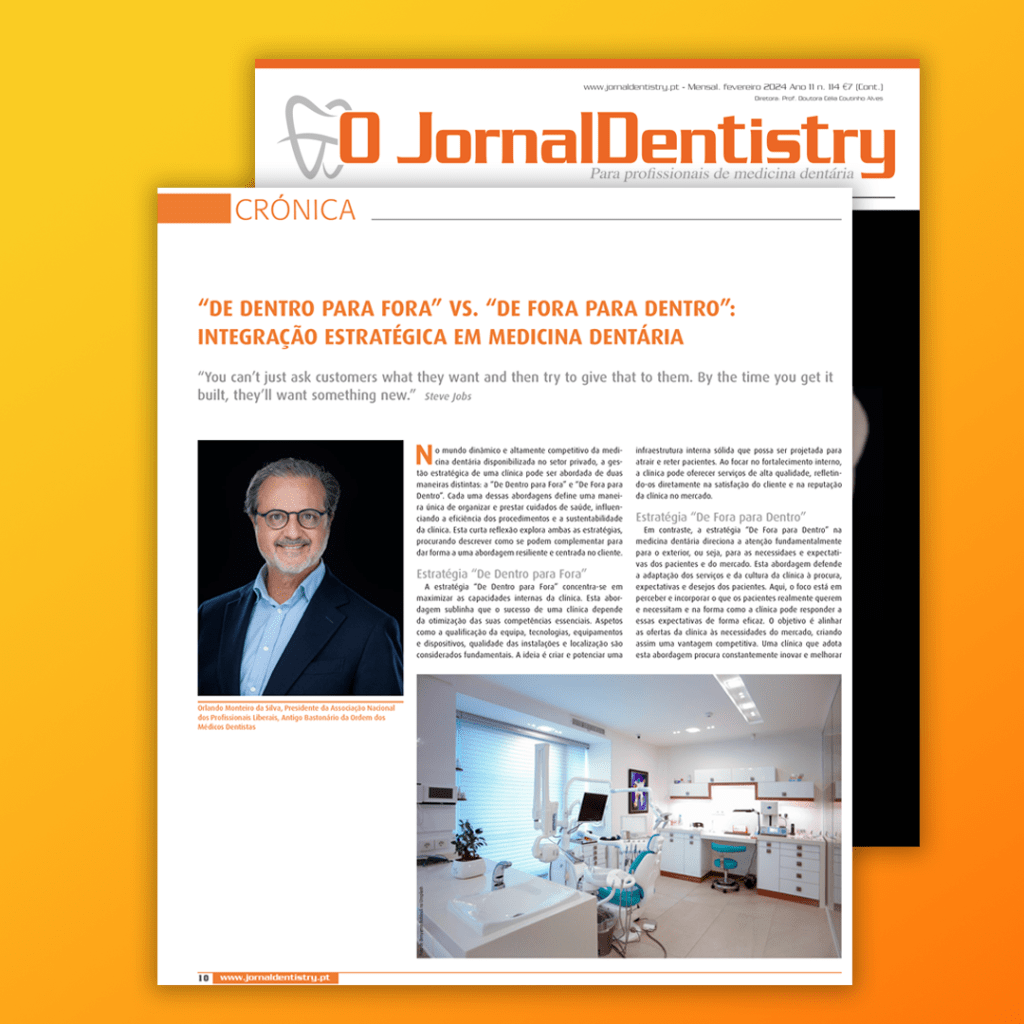

 Orlando Monteiro da Silva