I took office at the Plenary Session of the (EESC), in Brussels, on 21, 22 and 23 last October, as a Member of the European Economic and Social Committee, Group III.
The European Economic and Social Committee is an advisory body created by the Treaty of Rome in 1957 to ensure that, through its opinions, the voices of economic and social actors are heard by the European institutions, thus taking part in the European Union’s decision-making process.
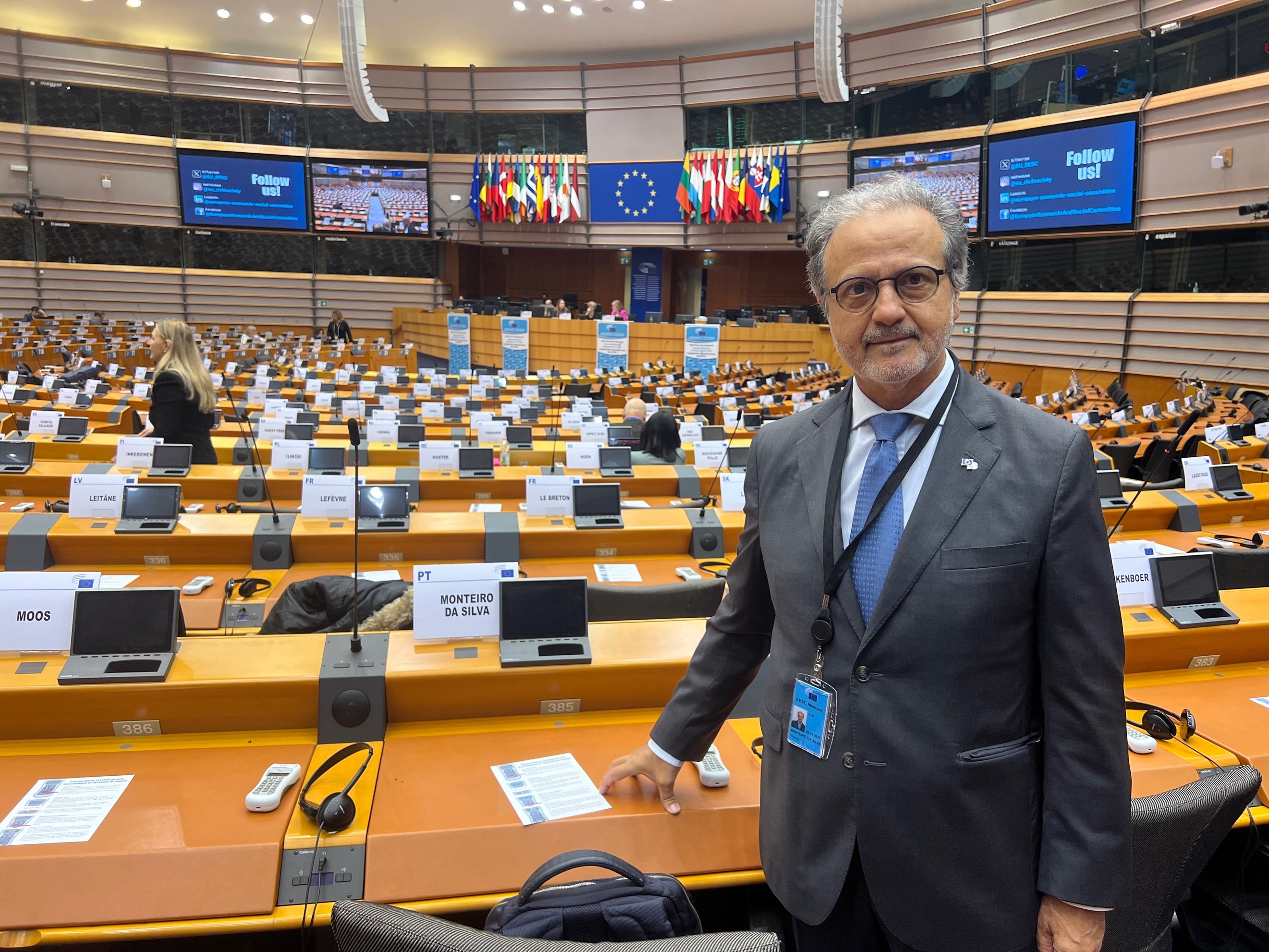
The EESC has 329 members, who are drawn from economic and social interest groups in Europe.
Members are nominated by national governments and appointed by the Council of the European Union for a renewable 5-year term of office. The latest renewal was in October 2020 for the 2020-2025 term of office.
They belong to one of three groups:
- Employers (Group I)
- Workers (Group II)
- Civil Society Organisations’ (Group III)
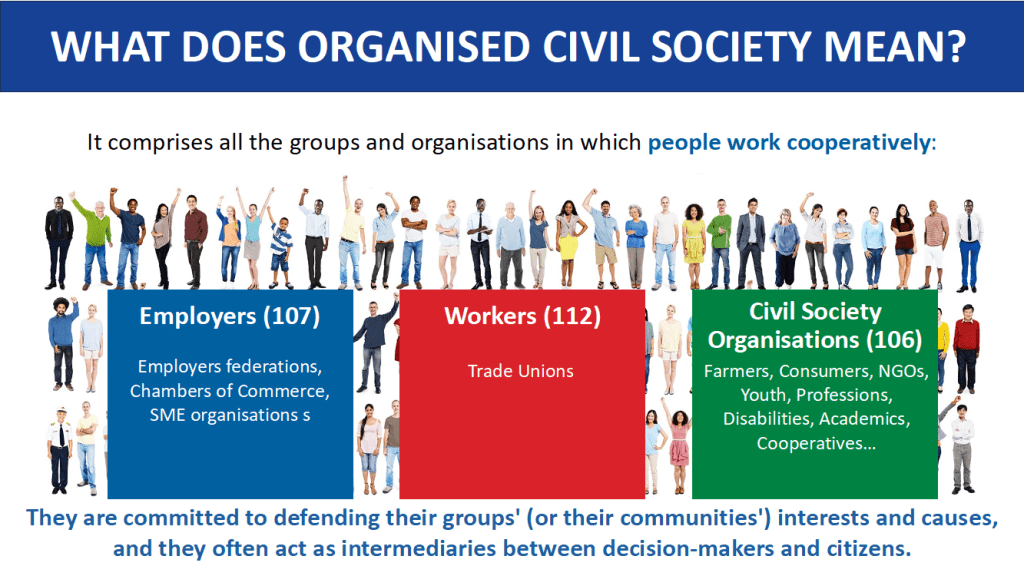
The ESEC is organized on:
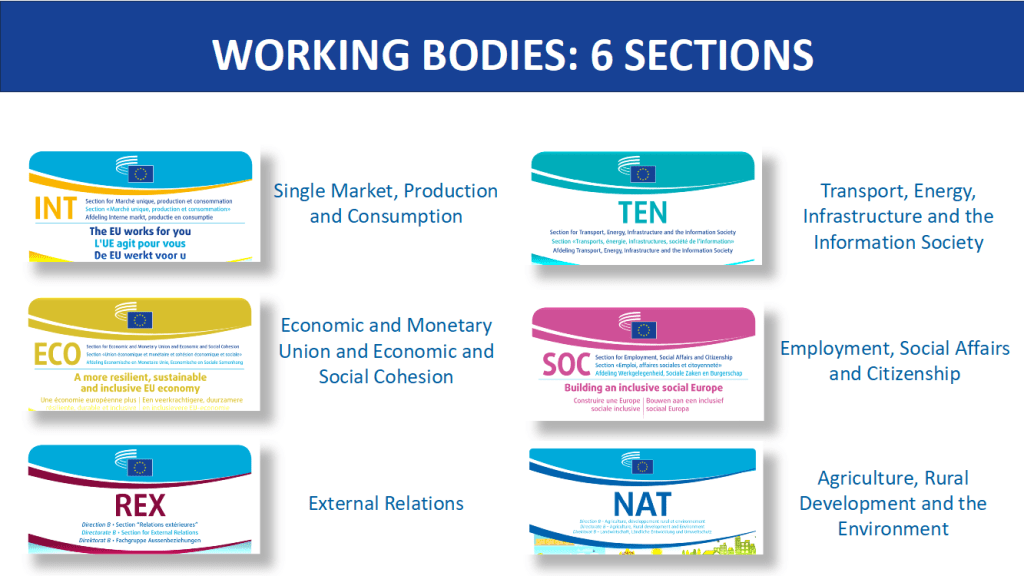
As a member of the Civil Society Organisations, Group III, I’ll be working directly on
- Internal Market and the Single Market Enforcement Observatory
- External Relations also included on the EU-Brazil Round Table.
Description as follows:
Internal Market
The Section for the Single Market, Production and Consumption (INT) of the European Economic and Social Committee is made up of 130 members and is responsible for drafting the EESC’s opinions on matters relating to the smooth operation and completion of the single market.
It deals with topics such as digitalisation and artificial intelligence, competition policy, industrial policy, financial services, small and medium-sized enterprises, the social economy, the circular economy, company law, consumer protection, research and innovation and the EU customs union.
The section is actively involved in the European Circular Economy Stakeholder Platform.
On issues of particular importance to the Single Market, the section holds public hearings to consult the broadest possible range of civil society organisations.
Every year since 1999, it has also organised the flagship Committee event European Consumer Day.
The section also has a Digital Transition and Single Market Observatory to monitor developments in the Digital Single Market and propose ways to eliminate obstacles or make improvements to it.
Single Market Enforcement Observatory
The Observatory of the Digital Transition and the Single Market was set up with a view to providing the EESC with a flexible, horizontal structure enabling it to:
- Analyse how the Digital Single Market operates;
- Identify shortcomings and obstacles; and
- Propose solutions.
The Observatory concentrates on the development of the EU Digital Single Market and covers, among other things, the activities of the EESC on the Digital Agenda, including policy initiatives related to Data, Cybersecurity, Research and Development (R&D) and market uptake of digital technologies.
External Relations
The EESC’s External Relations section (REX) is tasked with monitoring the EU’s external activities through a dialogue with civil society organisations from the non-EU countries and regions with which the EU has formal relations. The Section also actively follows the EU’s trade and development policies.
The main task of the EESC in the field of external relations is supporting the Eu- ropean Union’s activities through a dialogue with civil society organisations of non-EU countries and geographical groupings with which the EU has formal relations.
To do so, the EESC counts on the work of its External Relations Section (REX). Composed of 129 members, the REX section is led by a president, three vice- presidents and a bureau of 12 members.
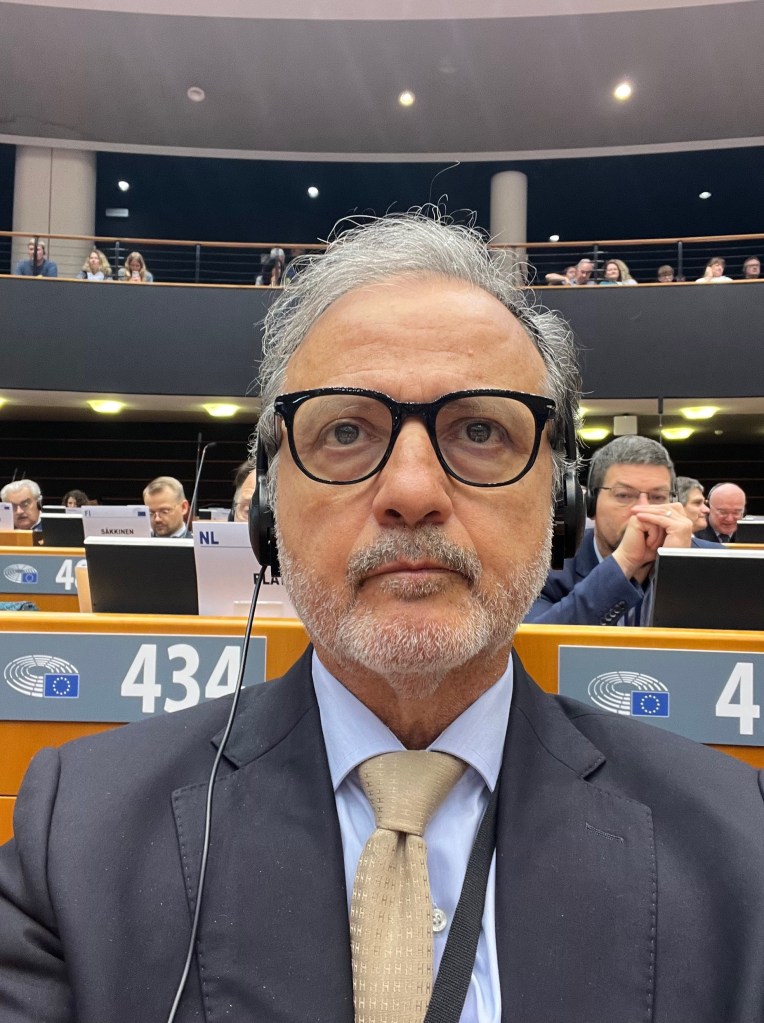
EU-Brazil Round Table
Driven by the collaboration between the European Economic and Social Committee (EESC) and the Brazilian Economic and Social Development Council (CDES), the EU-Brazil Civil Society Round Table held eight meetings between 2009 and 2014.
Following the re-establishment of Brazil’s civil society advisory body in 2023 – now operating as the Sustainable Economic and Social Development Council of Brazil (CDESS) – and in accordance with the EESC-CDESS Memorandum of Understanding signed on 9 April 2024 in Brasília, as well as the Joint Statement issued by the President of the EESC and the Minister of Institutional Relations of Brazil on 10 April 2024, the EU-Brazil Civil Society Round Table has been officially reactivated.
The number of members per Member State is as follows:
- France, Germany and Italy have 24 members each
- Poland and Spain have 21
- Romania has 15
- Austria, Belgium, Bulgaria, the Czech Republic, Greece, Hungary, the Netherlands, Portugal and Sweden have 12
- Croatia, Denmark, Finland, Ireland, Lithuania and Slovakia have 9
- Latvia, Slovenia and Estonia have 7
- Cyprus and Luxembourg have 6
- Malta has 5
Portuguese Representatives
Among the members of the European Economic and Social Committee are 12 Portuguese representatives, who took office this Wednesday for a five-year term, in a ceremony held at the European Parliament in Brussels.
On the employers’ side (Group 1), the Portuguese representatives are Luís Mira (Confederation of Portuguese Farmers), Gonçalo Lobo Xavier (Portuguese Business Confederation), Paulo Barros Vale (Portuguese Tourism Confederation) and Vasco de Mello (Portuguese Confederation of Commerce and Services).
Representing workers (Group 2) are Carlos Silva and José Cordeiro (both from the General Union of Workers) and Carlos Trindade and Hélder Pires (both from the General Confederation of Portuguese Workers — National Inter-Union).
As representatives of civil society organisations (Group 3) are Francisco Silva (Portuguese Confederation of Social Economy), Nuno Serra (National Confederation of Agricultural and Agricultural Credit Cooperatives of Portugal), Orlando Monteiro da Silva (National Association of Liberal Professionals) and Inês Cardoso (League for the Protection of Nature).

I’ll be sharing my activities on social media and particularly in this blog.
 Orlando Monteiro da Silva
Estimado Orlando,
Uma vez mais votos de muito sucessos e estamos bem representados
Abraço e tudo de bom~~jorge
Com os meus melhores cumprimentos
[cid:image001.png@01DC5657.8CE95E40]