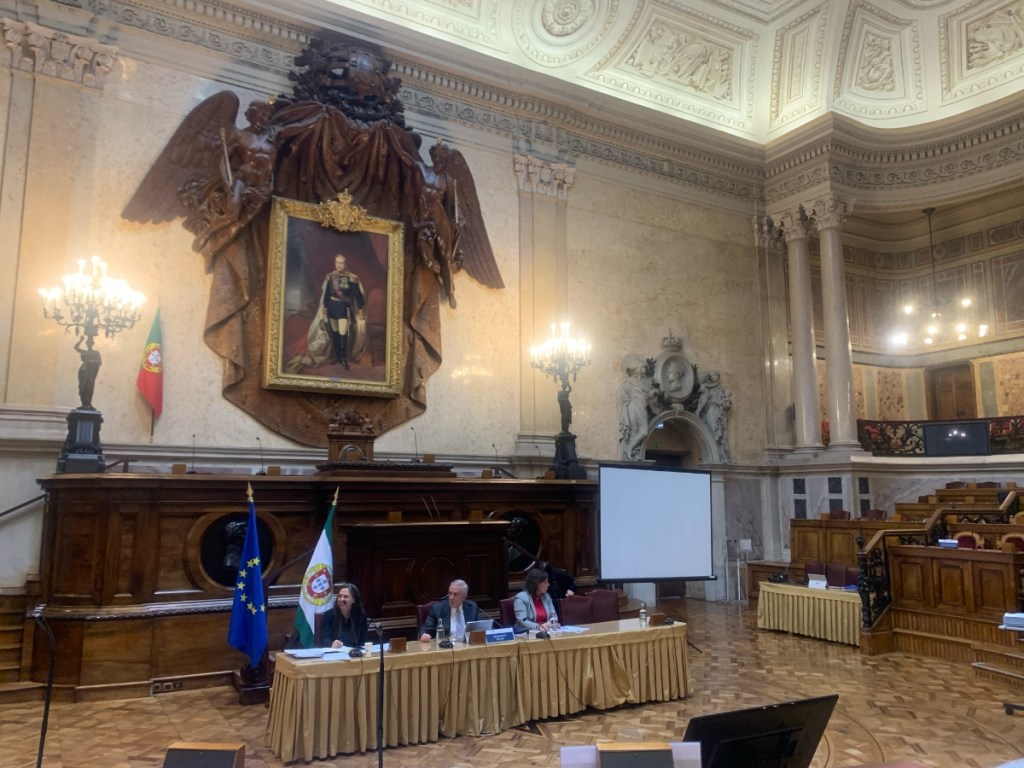
I have taken office as a Counselor in the Senate Room of the Assembly of the Republic, representing Liberal Professions (Self- Employed, Freelancers and Independent Workers)
The role of the Economic and Social Council and the civil society it represents essential in promoting a social and cultural shift in the way governments and legislators perceive liberal professionals and their businesses. I am fully committed to collaborating with CES in promoting and implementing broad, profound, and structural changes that will shape the future of liberal professions and professionals.
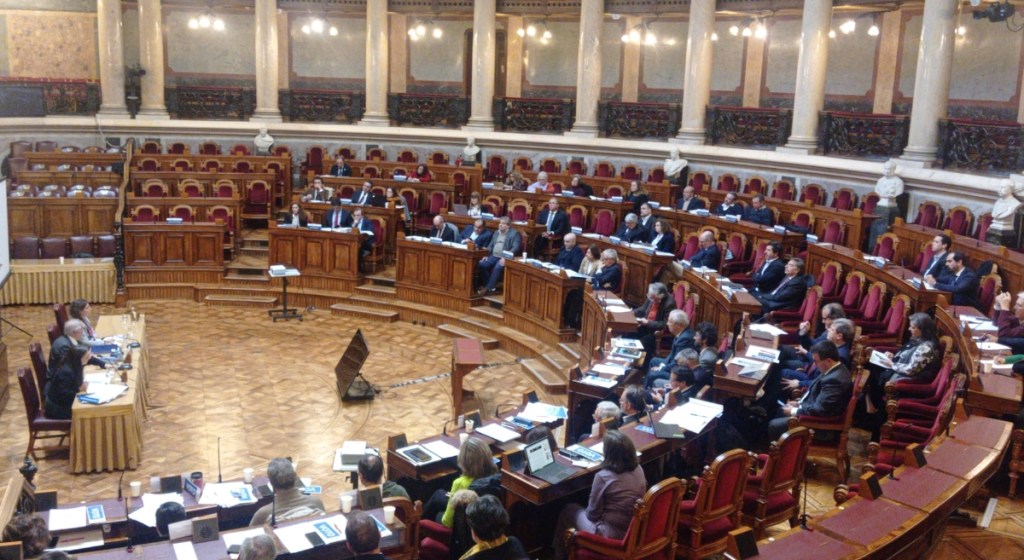
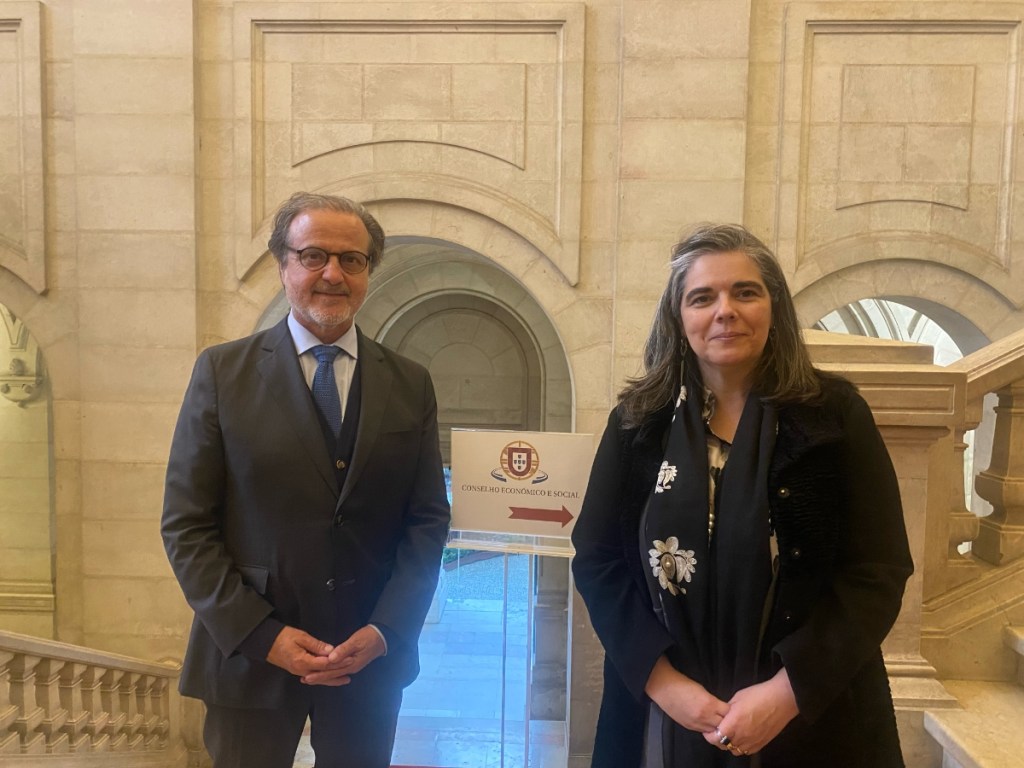
I will represent the National Association of Liberal Professionals (ANPL) in the category of organizations representing liberal professions. The following reflection outlines the reasons for this nomination:
ANPL was established in 2021 and was publicly and symbolically presented on May 1st of that year, highlighting some of the main challenges faced by liberal professionals.
ANPL was founded by a group of liberal professionals to add value, defend, and promote liberal professions, recognizing the need for these professionals to be properly heard, acknowledged, and valued. Only in this way can we help prevent the departure of many of the most qualified professionals from our country, the proletarization of these professions, the resulting financial anxiety, the diminishing recognition of their importance, and the inevitable decline in the quality of services provided to the market, businesses, and individual consumers.
We advocate and promote the principles and values adopted by liberal professionals, including the defense of life, autonomy, independence, trust, professional self-regulation, and professional secrecy, among others.
Some challenges are particularly relevant for liberal professionals, such as mobility and recognition of qualifications, continuous training, artificial intelligence and its impact, digital transformation, and energy and climate transition.
In Portugal, we are particularly focused on social protection and taxation applicable to liberal professionals.
A significant portion of the challenges and problems affecting liberal professionals relate to labor activities and the regulation of their economic and professional relationships, such as contracting modalities, wage issues, or fees.
Additionally, other crucial issues include ensuring fairness in taxation, especially for independent liberal professionals, as well as social protection, unemployment and underemployment, parental support, retirement and pensions, and access to continuous training.
Fragmentation of Liberal Professionals
There are many types of liberal professionals. Some work independently as freelancers, as they are called in some countries. Others lead or are part of teams. Some take a more entrepreneurial approach, forming sole proprietorships, limited liability companies, or working with larger teams, often employing dozens of other liberal professionals. Others work under employment contracts while still maintaining the responsibilities and autonomy inherent to their profession, which should be protected. Some professionals even have multiple occupations that are not directly related to their main profession.
Therefore, the world of liberal professions is fragmented, heterogeneous, and complex and needs to be analyzed, studied, and better understood.
Characterizing the Liberal Professions Sector
Data on liberal professions and professionals have not been adequately studied or shared in Europe and in Portuguese society by universities, organizations, or even political authorities.
We believe it is important to improve literacy in this sector, identify best practices, particularly in Europe, and highlight key statistics regarding liberal professions. We aim to identify the barriers that national and international liberal professionals face in their careers. Many of them are highly qualified young people that Portugal and other countries are turning their backs on, while older professionals are often discarded, left to face a difficult and undignified retirement.
For instance, according to the European Economic and Social Committee (EESC), about 22% of workers in Europe are engaged in liberal professions.
Regarding the Portuguese economy, excluding the arts and culture sector to allow comparison with neighboring countries, liberal professions contribute:
21.7% of Gross Value Added (GVA)
16.5% of direct employment
26.3% of business fabric
28.7% of corporate investment in R&D (Research & Development)
We have an urgent need to conduct more studies and properly characterize the reality of liberal professions in Portugal.
We also know that the number of self-employed professionals with higher education has increased by around 40% over the past five years in Portugal.
According to data from the Portuguese Ministry of Finance, there are over 1 million registered self-employed professionals in the country.
The Lack of Recognition for Liberal Professionals in Portugal
Despite exceeding 1 million professionals, liberal professionals in Portugal rarely receive proper representation or full defense in the socio-professional landscape. As I mentioned, physically, we exist—but beyond that, we are merely tolerated.
Portugal cannot continue to undervalue such a large number of qualified professionals who often take on the risks of self-employment, entrepreneurship, and the investment in education and innovation—all of which benefit businesses of all sizes, social institutions, and the State.
At ANPL, as an interprofessional association, we define liberal professionals as workers with intellectual qualifications, including artistic and cultural professions, who uphold responsibility, autonomy, and independence in the best interest of consumers and society as a whole.
This definition is broad yet focused, accommodating not only classical self-regulated liberal professions (self-regulated by professional orders) and those regulated directly by the Portuguese State or private associations, but also a wide range of other professions, such as:
Data Protection Officers, Data Analysts, Financial and Strategy Consultants, IT Professionals, Instructors, Chefs, Coaches, Designers, Journalists, Musicians and Theater Directors, Teachers, Writers and Gallery Owners, Specialized Translators and Antiquarians…And many other emerging professions.
There are those who want to eliminate this form of work, transforming liberal professionals into employees—but we want to remain liberal professionals.
We are willing to take on the risks of self-employment, entrepreneurship, uncertainty, and even autonomy within organizations. However, we need to be properly recognized and supported through a Legal Statute that ensures fair treatment for our profession compared to other forms of work.
The purpose of ANPL is to engage with liberal professionals and civil society and to put some of the key issues on the table—issues that will determine the future of this profession and how public authorities, policymakers, regulators, and society at large perceive it.
Liberal professionals want to move away from outdated corporatism and elitism. They seek to establish common values across professions and correct the current situation in Portugal, where they lack full representation and protection in terms of economic rights, taxation, and social security.
Organizations and businesses must also do their part—not only in terms of governance, inclusion, sustainability, and conflict of interest management, but also in upholding the ethics of our professions.
Finally, citizens have the right to know whether the organizations and businesses (public, private, or social) where liberal professionals work comply with corporate codes of conduct and professional ethics.
We need European and national policymakers to reduce bureaucracy in our professions. We cannot be choked by blind rules and excessive regulations.


 Posted by Orlando Monteiro da Silva
  Orlando Monteiro da Silva