Do it Yourself Dentistry (DIY) – A Red Carpet to Illegal Practice
In writing about the pressing issues in oral health care, as a previous note, I must express my deep admiration for Professor Lois K. Cohen, Ph.D., Consultant of the National Institute of Dental and Craniofacial Research and the National Institutes of Health of the United States of America.
Although a sociologist by training, as noted by Columbia University, “Professor Cohen has never filled a cavity or asked a patient to “open wide.” Yet, her extensive experience in analyzing large data sets, asking critical questions, and forging her own career path has given her unparalleled insight into oral diseases, their social determinants, and the intricacies of health care delivery systems, as well as public self-care practices both nationally and globally”.
I couldn’t agree more with this assessment. She stands as one of the most knowledgeable scientists on oral health issues.
I had the honor of knowing her during my presidency of the FDI World Dental Federation (2009-2013), and since then, I’ve had the privilege of meeting her in various oral health forums worldwide, most recently in my hometown of Porto, Portugal. Lois’s collaborative and information sharing personality has been a significant inspiration for my writings, including this article. Thank you, Lois.
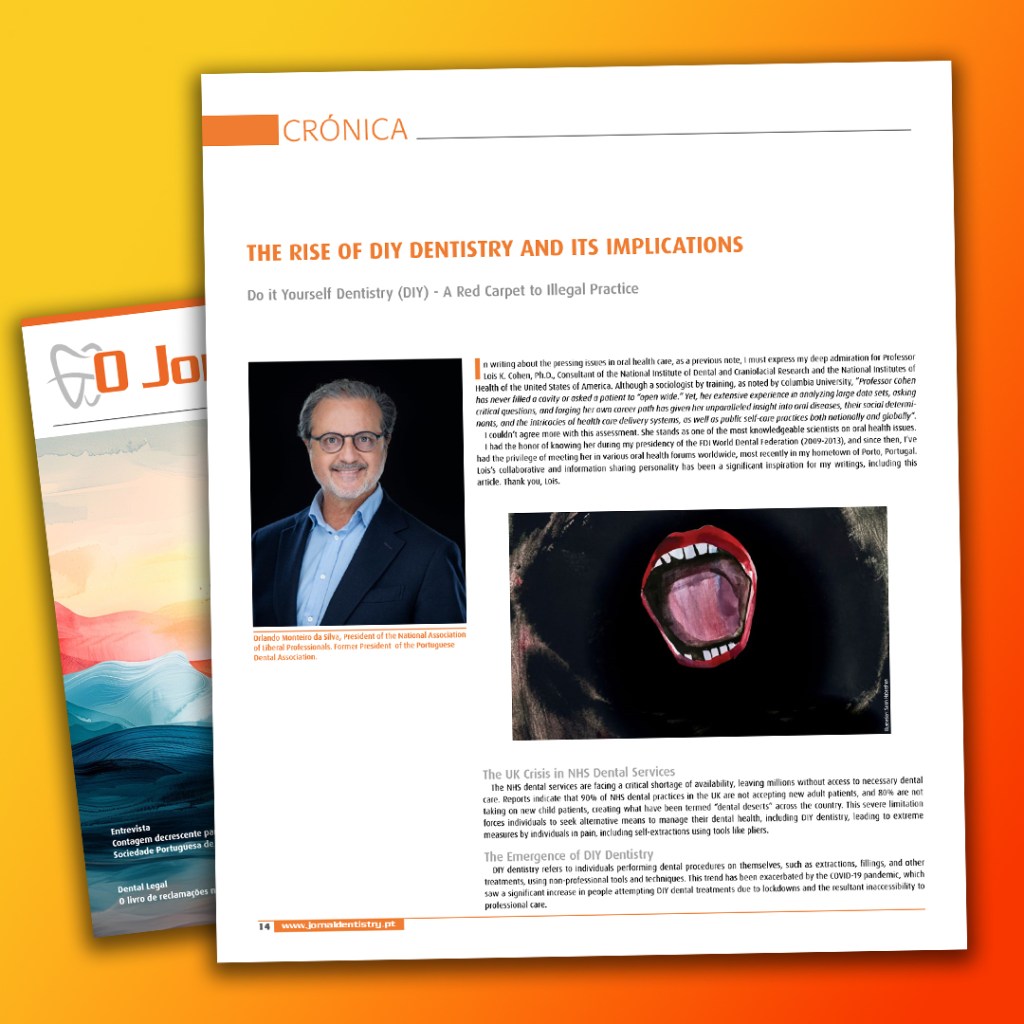
The UK Crisis in NHS Dental Services
The NHS dental services are facing a critical shortage of availability, leaving millions without access to necessary dental care. Reports indicate that 90% of NHS dental practices in the UK are not accepting new adult patients, and 80% are not taking on new child patients, creating what have been termed “dental deserts” across the country.
This severe limitation forces individuals to seek alternative means to manage their dental health, including DIY dentistry, leading to extreme measures by individuals in pain, including self-extractions using tools like pliers.
The Emergence of DIY Dentistry
DIY dentistry refers to individuals performing dental procedures on themselves, such as extractions, fillings, and other treatments, using non-professional tools and techniques. This trend has been exacerbated by the COVID-19 pandemic, which saw a significant increase in people attempting DIY dental treatments due to lockdowns and the resultant inaccessibility to professional care.
Dangers of DIY Dentistry
The practice of DIY dentistry poses numerous health risks, including infection, improper treatment, and exacerbation of existing dental issues. Without proper training and sterilization techniques, individuals are at high risk of severe complications. Additionally, DIY methods often fail to address underlying problems, leading to prolonged pain and suffering.
International Comparisons
While the UK faces a particularly acute crisis, other countries also experience similar issues. For example, in the United States, the lack of affordable dental care leads many to resort to DIY methods. This global trend underscores the need for systemic reforms in dental healthcare accessibility.
Reflecting on my home country, Portugal, I am reminded of the challenges we faced in the late 80s, 90s, and first decade this century to combat illegal and abusive practices by unqualified individuals. I never expected to witness a similar scenario in a developed nation like the UK.
This is not just a UK issue, but a trend seen in regions worldwide where shortages of healthcare personnel are significant challenges. Europe and the US, among others, face similar crises, highlighting that the lack of access to oral health care poses severe safety concerns globally.
Illegal Dental Practices
The rise of DIY dentistry could potentially lead to an increase in illegal dental practices. Unlicensed individuals may start offering dental services to others, posing as professionals. This not only undermines public trust in healthcare systems but also endangers the health of those receiving such treatments.
Addressing the Issue
To mitigate the risks associated with DIY dentistry and prevent illegal practices, several steps need to be taken:
- Increase Funding for NHS Dentistry: Adequate funding and reform of the NHS dental contract are crucial to ensure more practices can accept new patients and provide necessary care.
- Improve Access and Affordability: Policies aimed at reducing the cost of dental care and increasing the number of practicing dentists can help alleviate the current crisis.
- Public Awareness Campaigns: Educating the public about the dangers of DIY dentistry and promoting preventive care can help reduce the need for emergency interventions.
- Regulation and Enforcement: Strengthening regulations and enforcement against illegal dental practices will protect public health and ensure that dental care is provided by qualified professionals.
- Political Attention: The dental crisis has also been a significant topic in recent UK parliamentary elections. All major parties have expressed concerns and proposed solutions to address the issue. Prime Minister Rishi Sunak and the leader of the opposition, Sir Keir Starmer, have both emphasized the importance of tackling the dental care crisis, with both visiting dental practices to highlight his commitment to finding solutions. This bipartisan acknowledgment underscores the urgency of addressing the deficiencies in the dental care system to prevent further deterioration of public health.
Conclusion
The trend of DIY dentistry is a direct consequence of the inadequacies in current healthcare systems, particularly the NHS in the UK.
Addressing this issue requires com prehensive reforms to increase access to affordable dental care, educate the public on the risks of self-treatment, and prevent the emergence of illegal dental practices. Without these changes, the public health risks associated with DIY dentistry will continue to grow.
We cannot entirely exclude that a similar effect may replicate in other areas of medicine.
You can read the full article, in Portuguese or English, in the Portuguese monthly edition of Dentistry magazine:
 Orlando Monteiro da Silva
[…] Negociação em medicina dentária: um compromisso com a excelência […]